

Ferrari’s energy leap
Ferrari Hypersail has revealed the energy management concept behind its 100-foot offshore foiling monohull, combining renewable energy, crew-generated power and automotive-derived control systems.
Photography by Ferrari
08 July 2026

Advertisement
Ferrari Hypersail has unveiled the onboard energy concept designed to power its 100-foot offshore foiling monohull, with the system engineered to achieve complete energy autonomy while maintaining the performance demands of ocean racing.
Developed by the Hypersail Tech Team in Maranello, the Energy Management system has been created to integrate the yacht’s onboard architecture and optimise efficiency across sailing, flight-control and hydraulic functions.
The concept draws directly on Ferrari’s automotive expertise, transferring technologies and development methods from road and race cars into offshore sailing. The system is designed to harvest energy from renewable sources, including solar and wind power, while also converting crew-generated power into electricity.

Advertisement
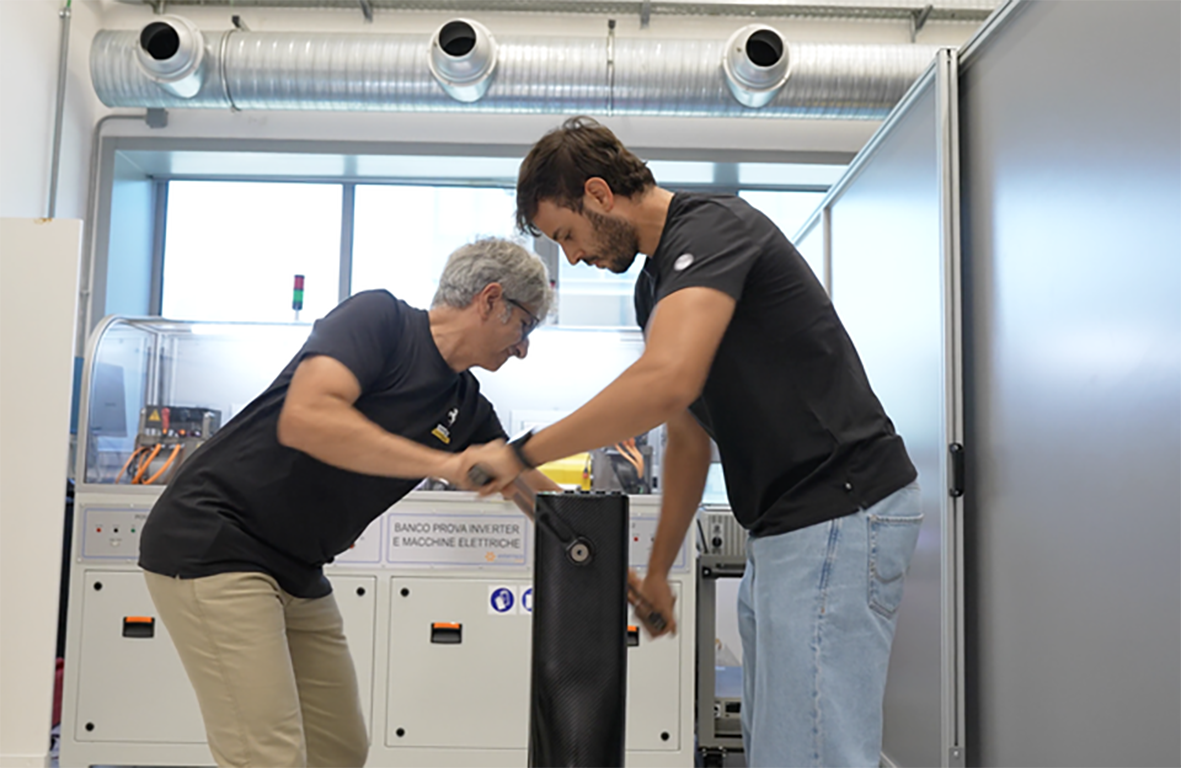
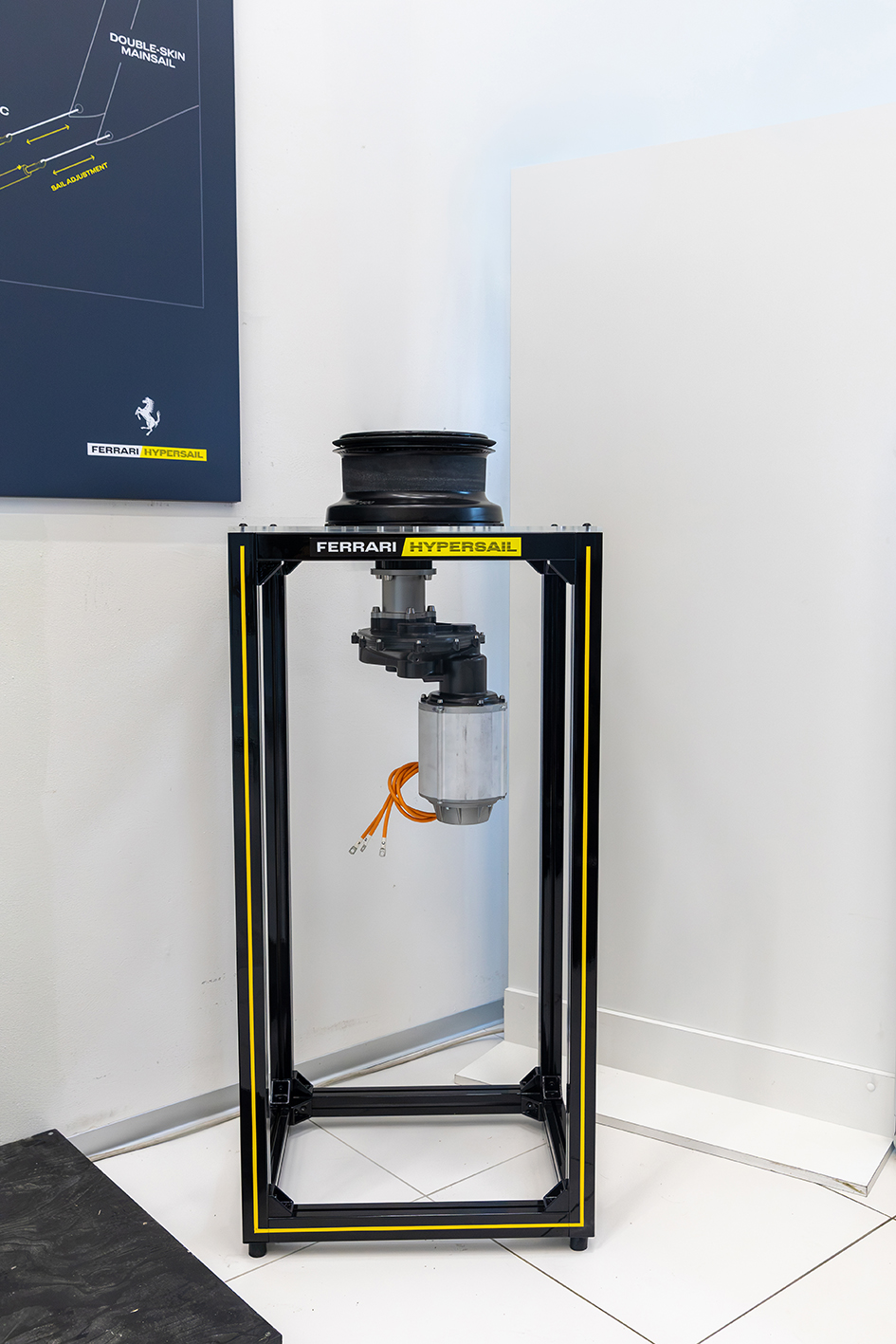
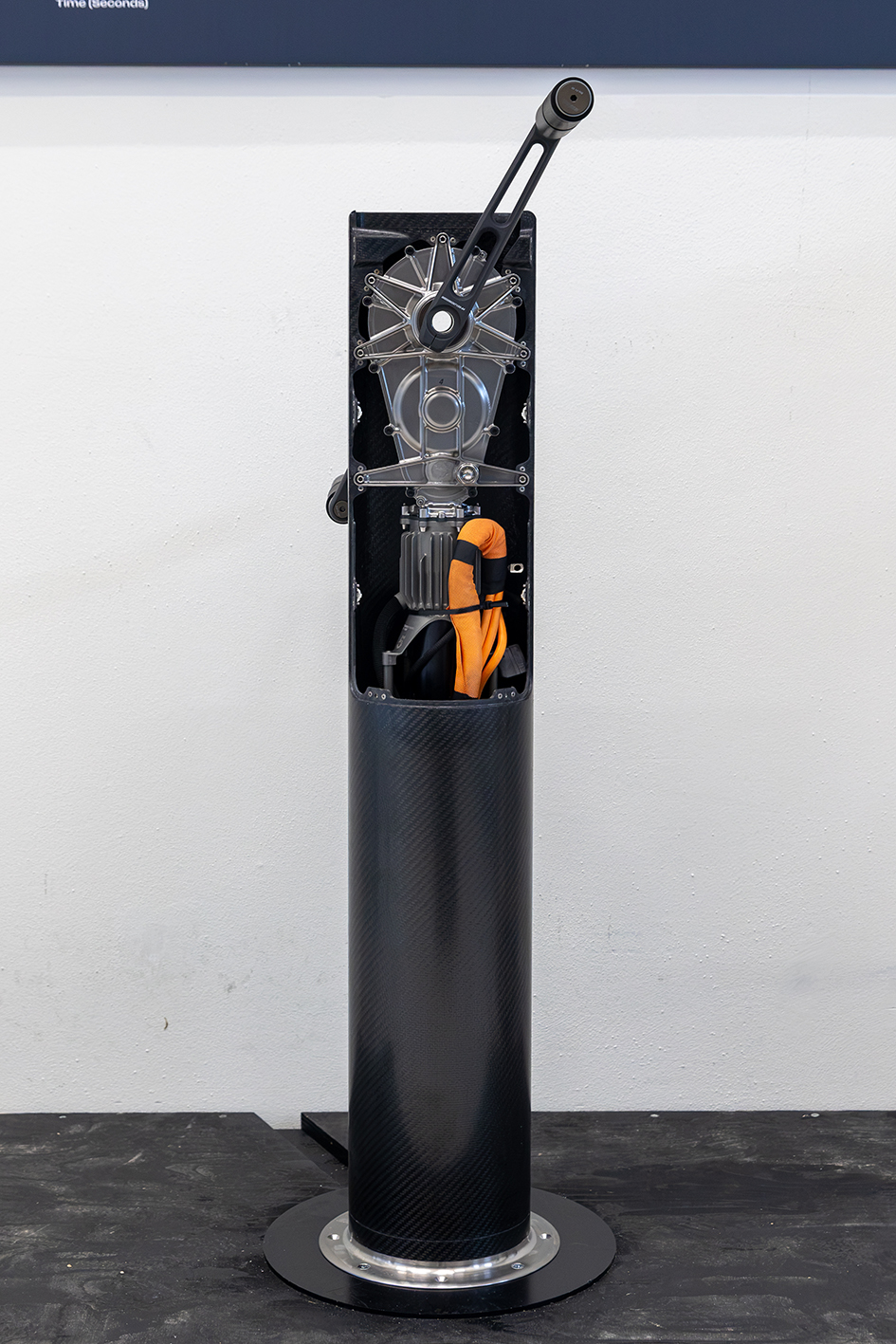
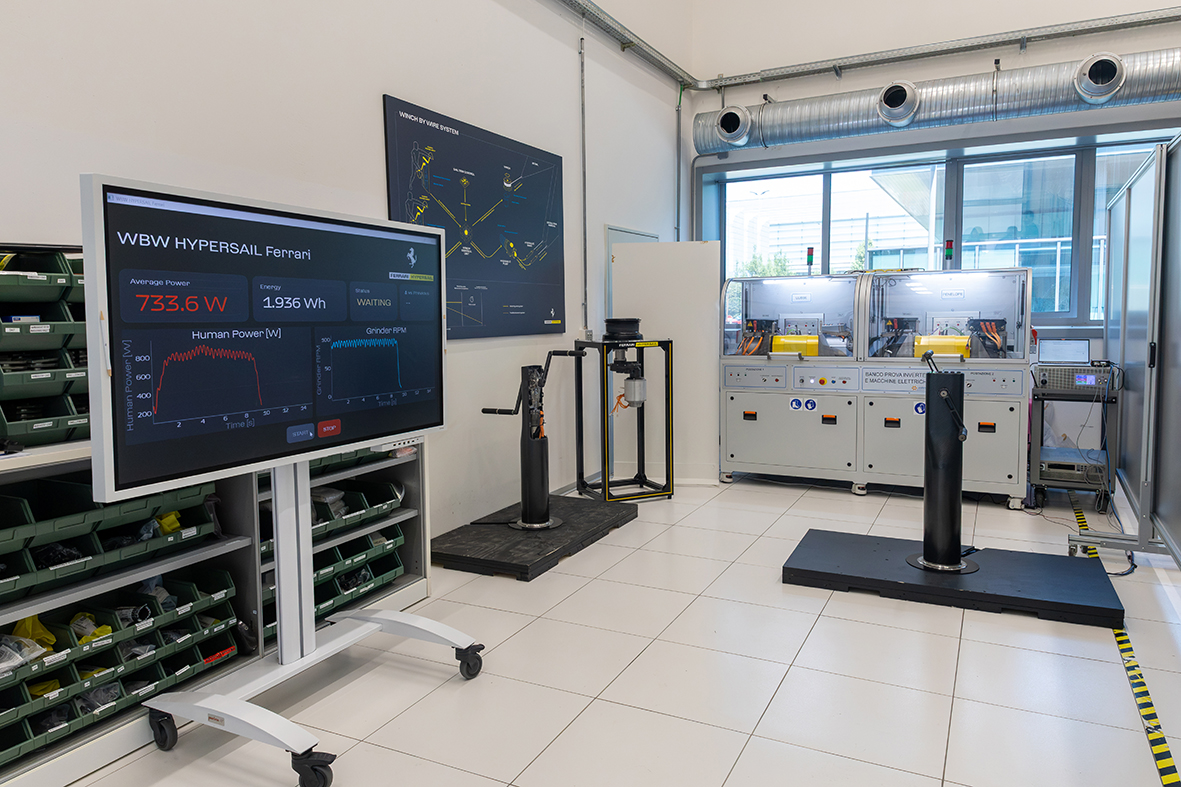
Above deck, Ferrari Hypersail introduces Winch-by-Wire technology. Instead of using crew power to drive conventional mechanical transmissions or hydraulic circuits directly, the system converts human output into electrical power, which is then distributed through the onboard grid.
The electricity generated by the yacht’s e-pedestals is used to drive e-winches controlling sail tension, or to operate the hydraulic pump responsible for on-deck adjustments. According to Ferrari, the system allows a single crew member to manage loads of up to 9 tonnes while maintaining a more consistent and efficient cadence.
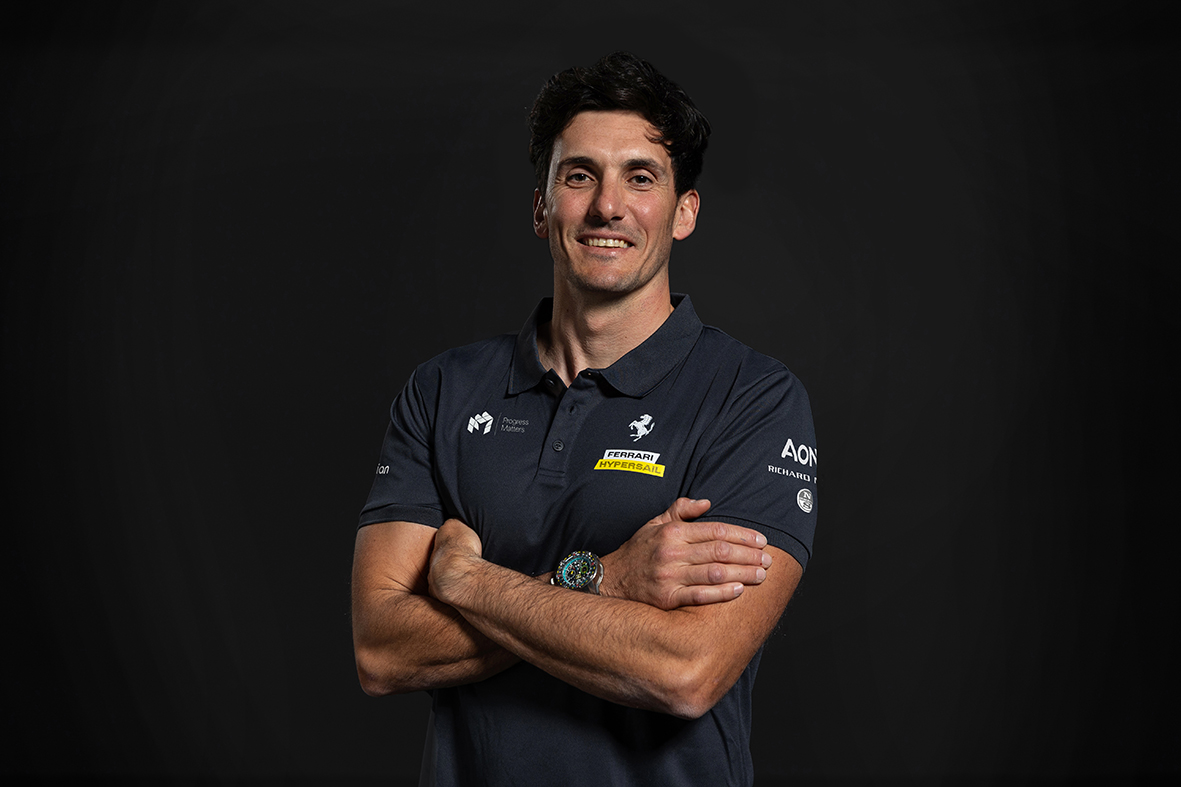
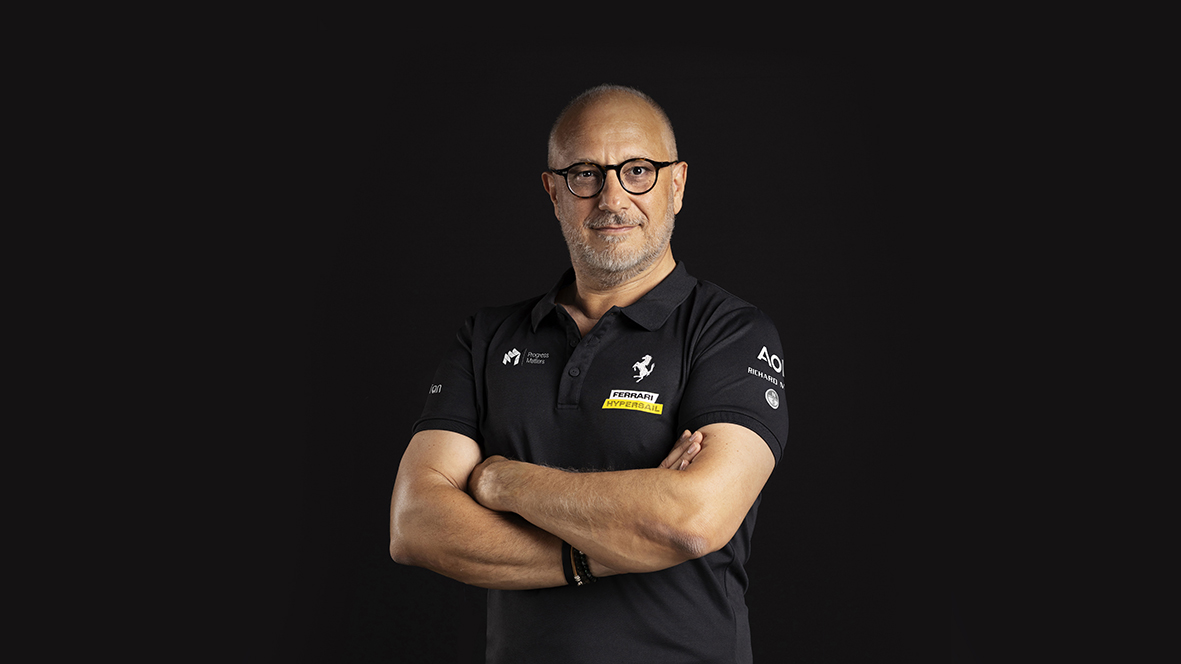
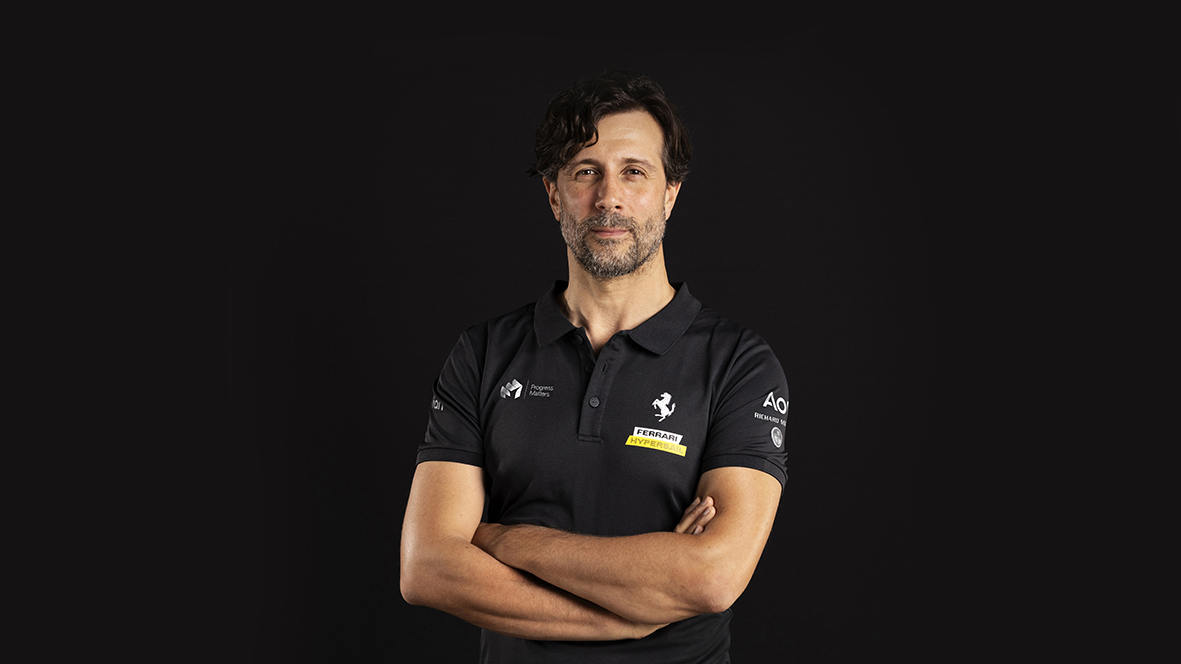
“Hypersail is the first foiling monohull for ocean racing to achieve complete energy autonomy,” said Marco Guglielmo Ribigini, Technical Team Leader of Ferrari Hypersail.
Thanks to an electrical system that ensures the ideal balance between efficiency and performance, alongside innovative solutions such as Winch-by-Wire, all on-board adjustments are powered entirely by energy generated while underway.”
Below deck, Ferrari Hypersail’s systems manage electronics, stability control and ride height on the foils. The yacht uses a platform of electronic control units and sensors, with four voltage levels ranging from 12V to 800V.
The Flight Control System manages the appendages through two operating modes. Slow movements, including macro-adjustments of the foil arms and canting keel, are powered by an 800V rear e-axle from the Ferrari Luce. Fast movements, including the rapid and continuous operation of control-surface flaps, are managed by two smaller pumps driven by 48V electric motors.
Ferrari says the separation of these systems is intended to deliver performance, energy efficiency and the redundancy required for offshore conditions.

The yacht’s electronic and hydraulic systems are powered exclusively by renewable sources. Surplus energy is stored in two identical 800V batteries, which distribute power according to the yacht’s dynamic requirements.
Solar panels are integrated into the deck and topsides, covering 100 square metres. The panels are walkable, include specific grip surfaces and have been placed according to simulations mapping solar exposure across different latitudes and potential ocean routes.
Wind generation is also incorporated at the stern, where removable wind turbines can be configured according to sailing requirements. Ferrari says the installation has been developed to balance power generation with aerodynamic efficiency at high speeds.
The energy concept marks another step in the development of Ferrari Hypersail, a project that extends Ferrari’s performance and endurance engineering into ocean racing.
Key technology
Project: Ferrari Hypersail
Type: 100-foot offshore foiling monohull
Developer: Ferrari Hypersail Tech Team
Technical base: Maranello, Italy
Core system: Energy Management
Energy sources: Solar, wind and crew-generated power
Crew-power technology: Winch-by-Wire
Solar coverage: 100 square metres of walkable panels
Battery system: Two 800V batteries
Voltage architecture: 12V to 800V
Control systems: Electronic control units, sensors and active Flight Control System
Appendage control: Foil arms, canting keel and control-surface flaps
Key claim: Complete energy autonomy for offshore racing
-

Advertisement
-

Advertisement
-

Advertisement
