

Breathtaking maxi
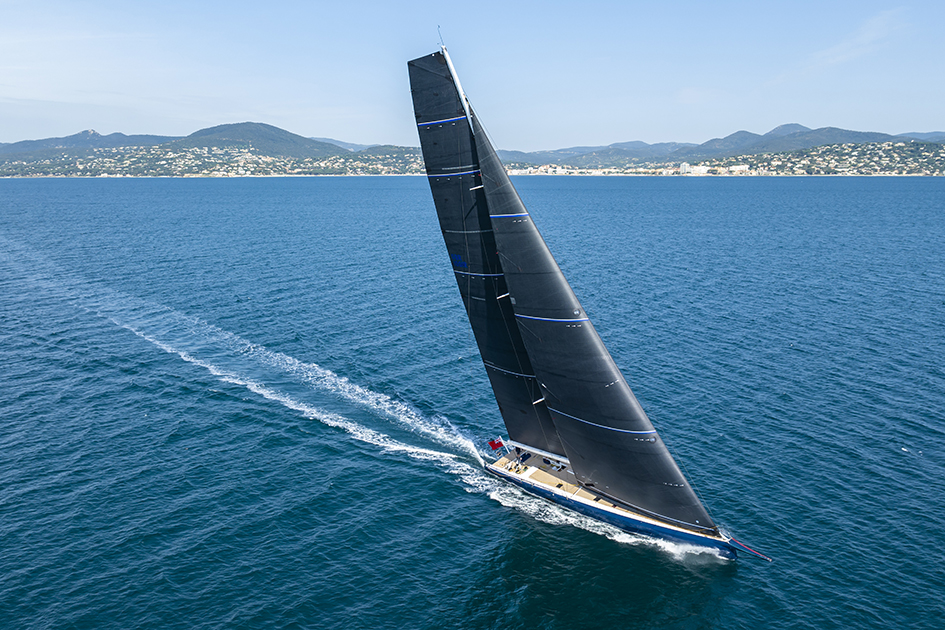
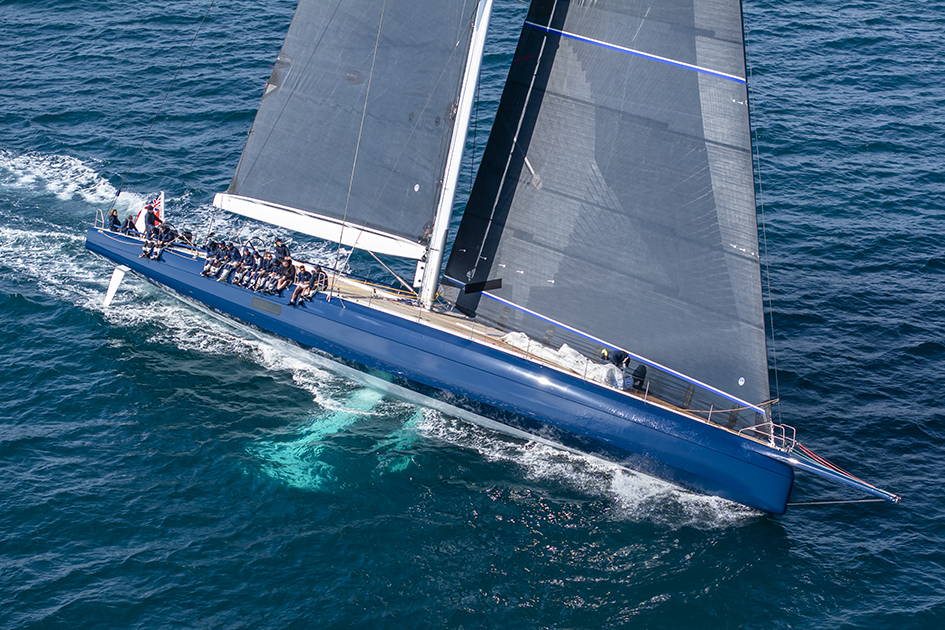
The 30.5-metre high-performance sailing yacht Magic Carpet e by Persico Marine, Italy was delivered to her owners in May. Blue Robinson took a ride and was smitten. Here, he shares his experience on board what he observes is one of the lightest and most advanced maxis on the planet.
Written by Blue Robinson
Photography by Carlo Borlenghi and Axel de Beaufort
03 November 2025
Advertisement
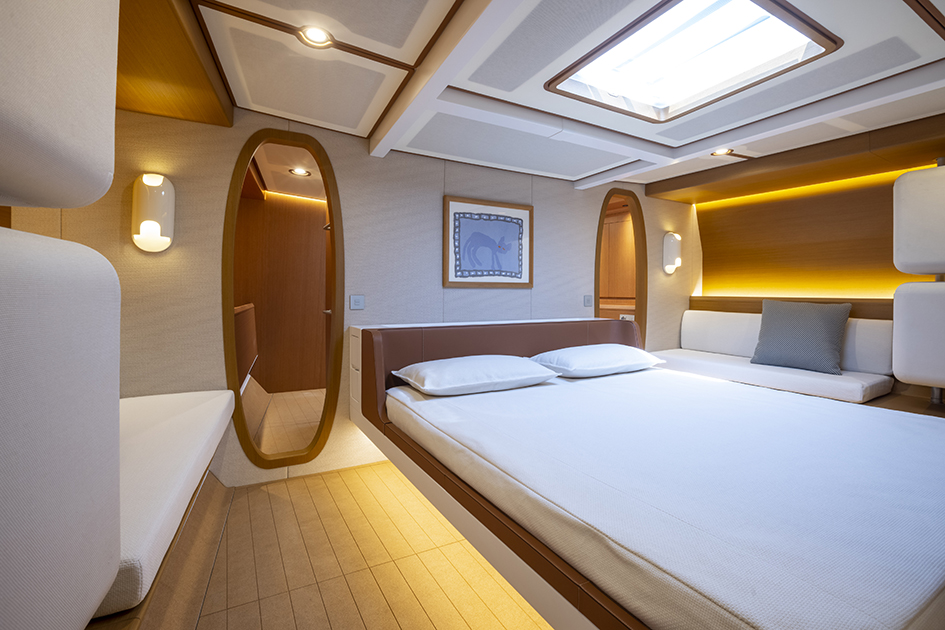
I am standing in the owner’s stateroom in the bow, admiring the stunning white stretched fabric and elegant leather trims, as we motor out of St Tropez in complete and utter silence. Welcome to the magical world of Magic Carpet e.
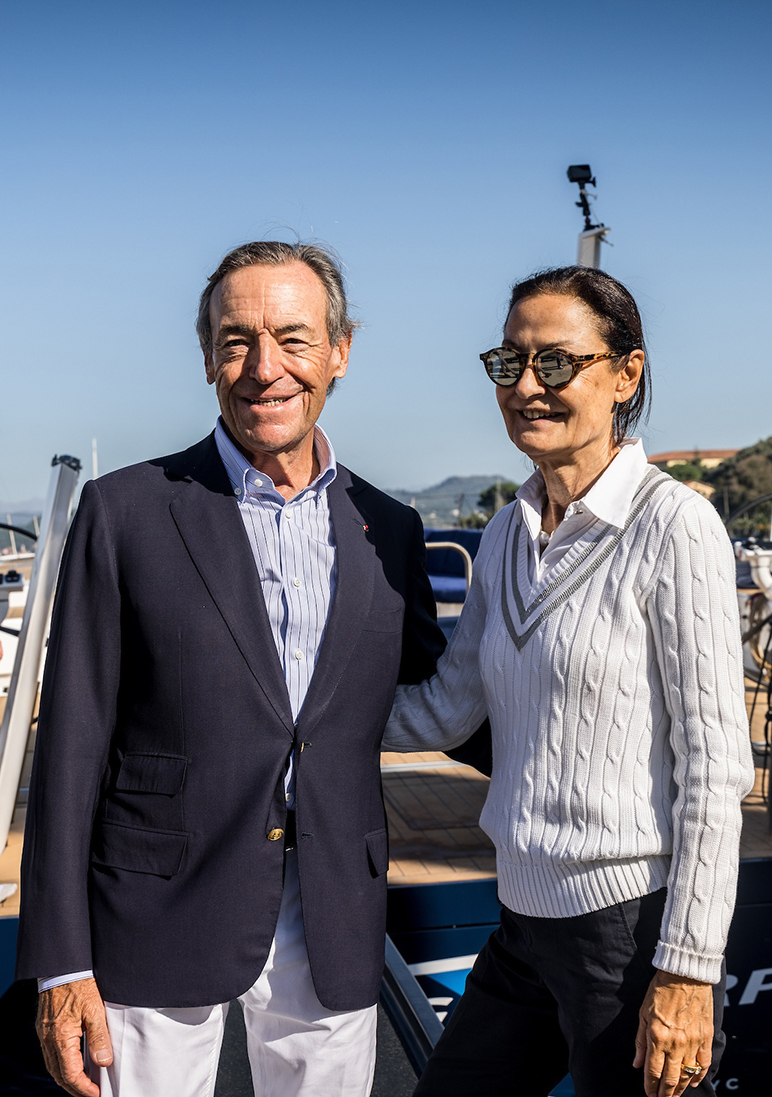
The reason that I am marvelling at the breathtaking level of detail in this cabin, is that the owners, Sir Lindsay and Lady Christina Owen-Jones, wanted people to view the boat and see a fully refined racing maxi, but a key part of this program is it is also a family cruising boat, for a day sail, or two-week cruise to Portofino, Corsica or Croatia.
Advertisement
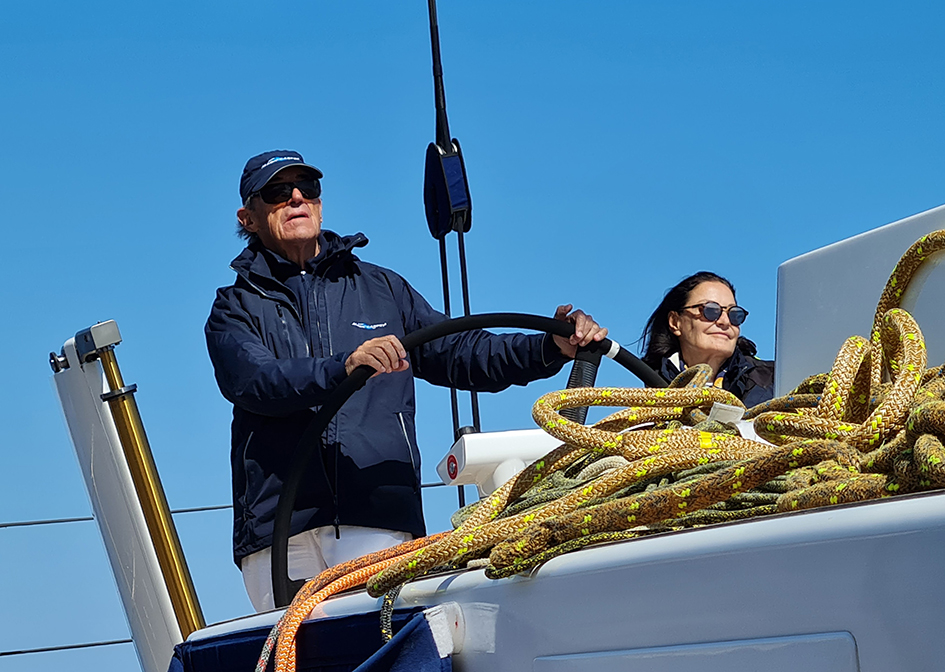
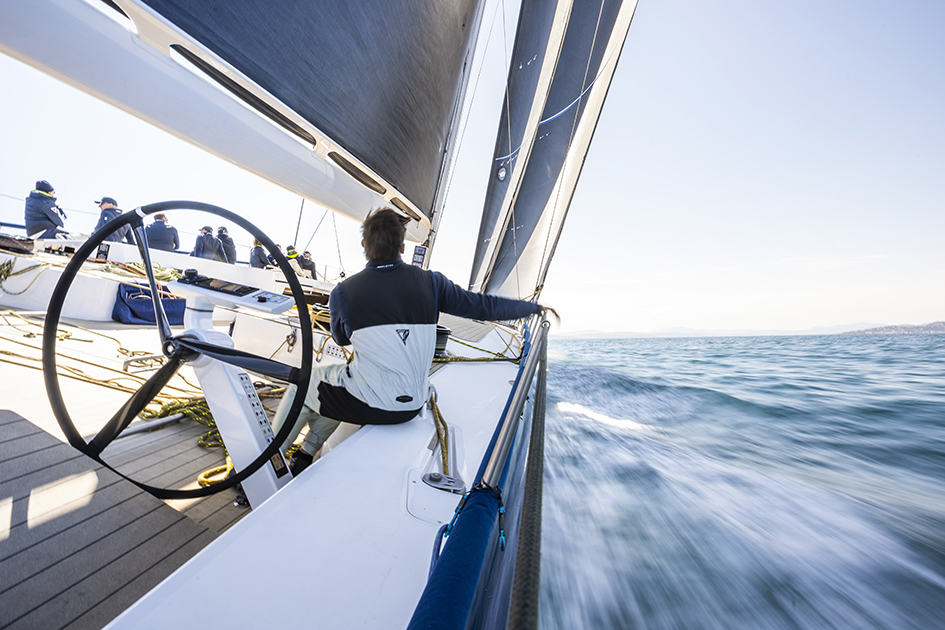
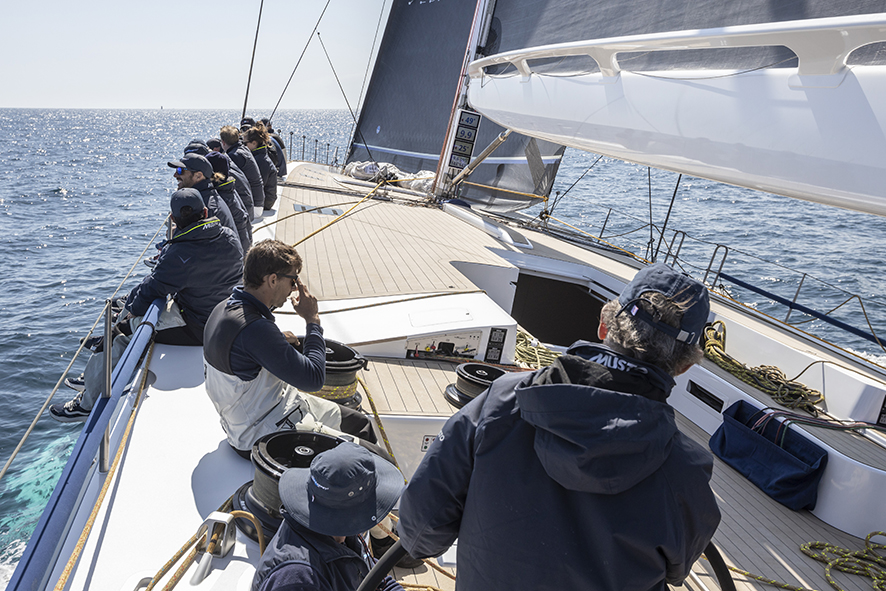
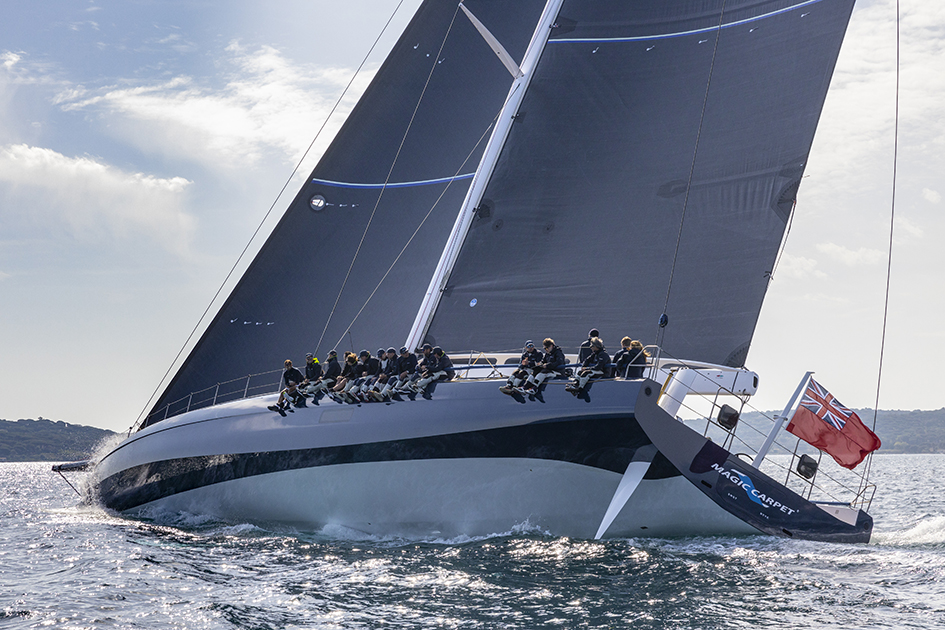
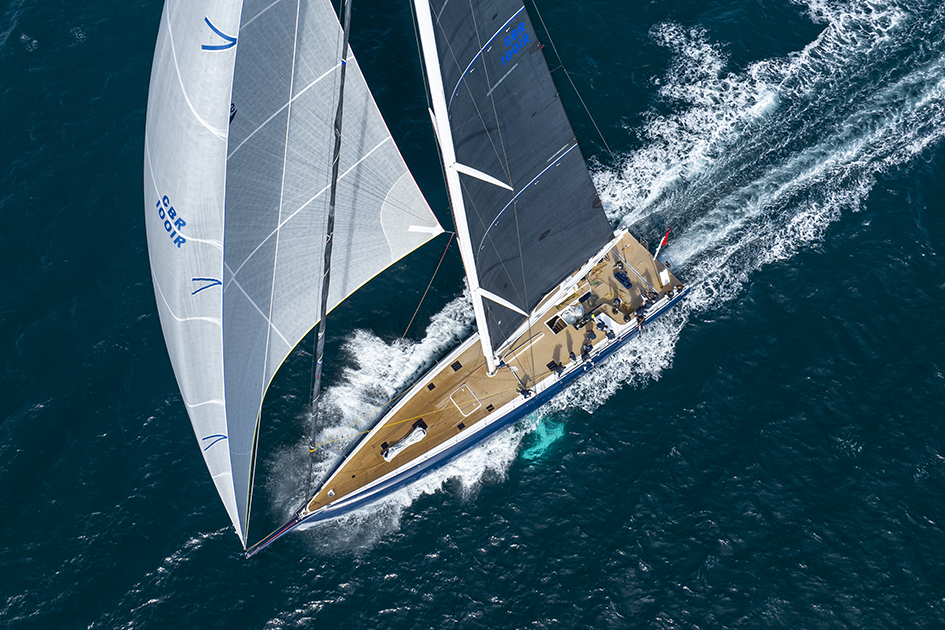
This means that a huge challenge was to create a racing yacht that performed to the highest level, and matched the quality of the interior, which has been a key element of the previous three yachts that bore the Magic Carpet moniker.
One of the core challenges involved here was the weight, and the goal of this project was to build a 37-tonne boat – more than 10 tonnes lighter than Magic Carpet 3.
This has been an incredible achievement, and from the outset has dictated a forensically strict breakdown on weight distribution. The interior had an allocation of two tonnes, and a big assist here is that the interior designer Axel de Beaufort is also a naval architect.
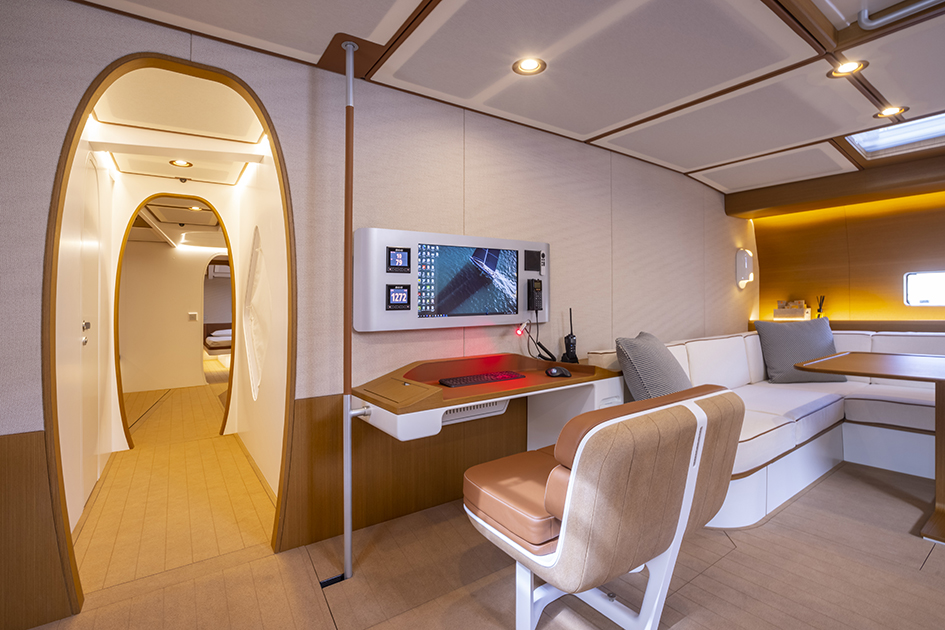
Working with designer Guillaume Verdier, they looked at form and function, a key example being any penetration of the structural bulkheads. All doors on board Magic Carpet e are an ovulated shape, this means reduced capping or extra reinforcement when cutting a hole in big carbon bulkhead, creating a spaceship feel, which Axel opted for, and the owners confirmed early on, with veneered carbon panels to deliver a traditional touch.
What is involved with the interior is a veneer panel, using single skin carbon thermo-moulded panelling, using lightweight Nomex, and advanced composite systems to deliver that interior weight target.
Even so, it took three attempts of the ceiling panels to arrive at the final outcome, but the result is a stunning product – and knowing the thought and research that went into this, it is unlikely that these panels could have been made any lighter. The ceiling/deckhead area is obviously a huge area which was targeted hard to save weight, and the result is a carbon framework, trimmed with lightweight leather, and an ultralight fabric stretched tight on the frame as you would over a painting.
This had to be extensively tested, to cope with the future humidity changes onboard. The beautiful detailing is everywhere, including the bed in the master cabin, using monolithic carbon, by Hermes Atelier Horizons, who make bespoke furniture. Using the same techniques that built TP52s and AC72s, Persico have created the stateroom bed in front of me, to weigh in at just 11 kilos.
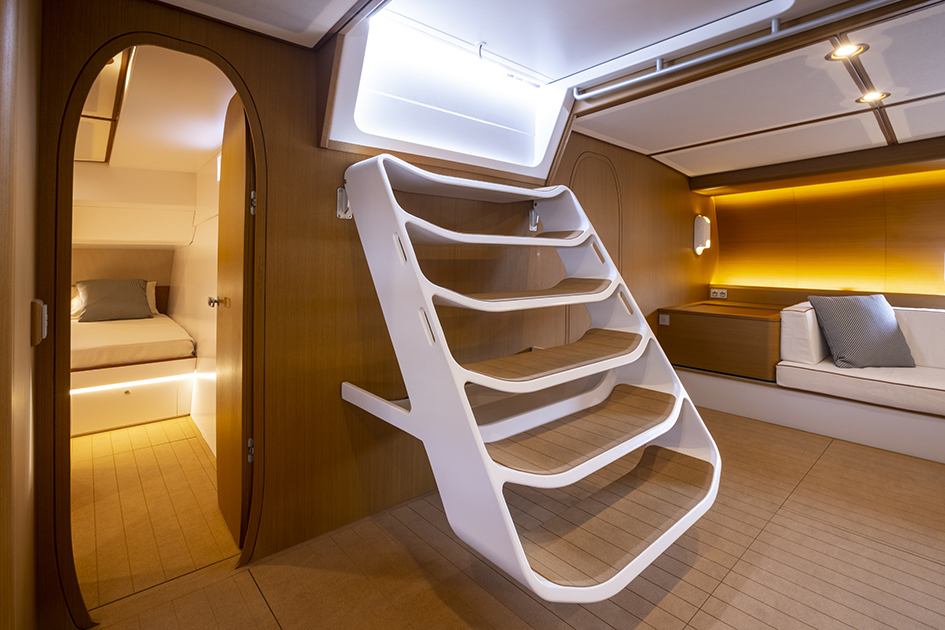
Stepping aft out of the owner’s cabin into the corridor, there is a form and function space. In the summer, there is a removable cabin using all this area, creating a fourth berth for guests or crew, and then for racing it is removed, leaving broad open space below a huge sail hatch.
Throughout the whole build process, designer Guillaume Verdier was insistent that every decision had to consider vertical centre of gravity, the placement of weight in relation to the vertical – meaning that the centre of gravity was low. Always.
Magic Carpet e has a huge sail plan, and powerful maxi sails now are outrageously heavy, and so the decision was made not to race with them stowed on deck as they did on Magic Carpet 3, but they need to be down below.
To facilitate this there is a vast curved-edge hatch, which means the large A2 and A Zero can be fed down to live in the corridor, saloon and galley when not in use. To accommodate this effectively, there is an inboard lifting system, which raises one of the furled sails up to the deck-head, to allow the lower sail to be moved rapidly in and out.
The port side bay of this storage area, is designed to store the inventory of Magic Carpet e’s multiple staysails. All the current downwind sails are furling, but to future-proof this, the hatch allows for soft sails and drop systems to lead directly aft, all the way back to the transom.
Also positioned in this area just forward of the mast is the sailing engine room, with the single-board canard system. A clear design brief very early on from Sir Lindsay, was this was to be a light-air inshore racing machine, and as you become accustomed to the quality of the interior and fine detailing onboard here, you have to rapidly remind yourself that this is a high-performance inshore maxi, still with the ability to race offshore in events like the Giraglia.
As part of the onboard maintenance routine, there is full access to the canard system, plus a clear panel displaying the entire canard up/down hydraulic ram, all part of the extremely high level of engineering on show from Cariboni onboard.
It is true that canards are not new appendages. We have seen them on 12 Metres, Version 5 IACC boats, IMOCAs, plus used on other canting keel maxis and offshore racing yachts, but what is new about the canard on Magic Carpet e is just what it is capable of, and here I have to be careful with what I reveal.
Yes, it can emerge out from the hull a long way. Yes, it can retract into the hull a significant distance, and yes, if you look closely on the foredeck just in front of the mast, there is a small hatch panel which can be removed, then a halliard clipped to the canard head, to fully extract it on long downwind legs, but the intense thought and R&D that has gone into this area is simply breathtaking.
Given the combined talents of Guillaume Verdier, Cariboni and Persico, what they have created is a multi-axis canard system within the IRC rule, which is still far from being fully optimised by the crew, but when it is mastered, I think will be a before and after moment in big boat racing.
Big call you say? Wait and see…
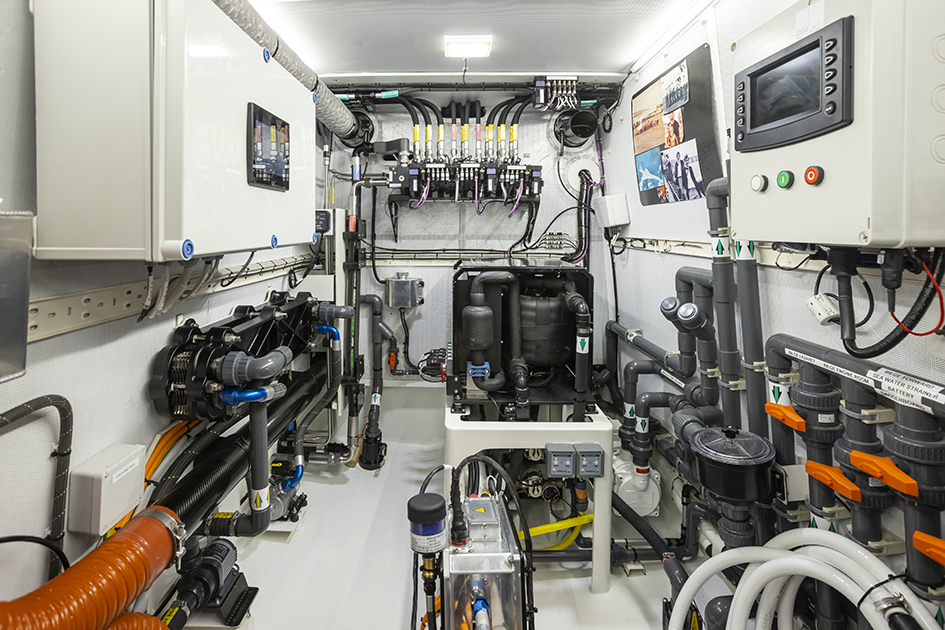
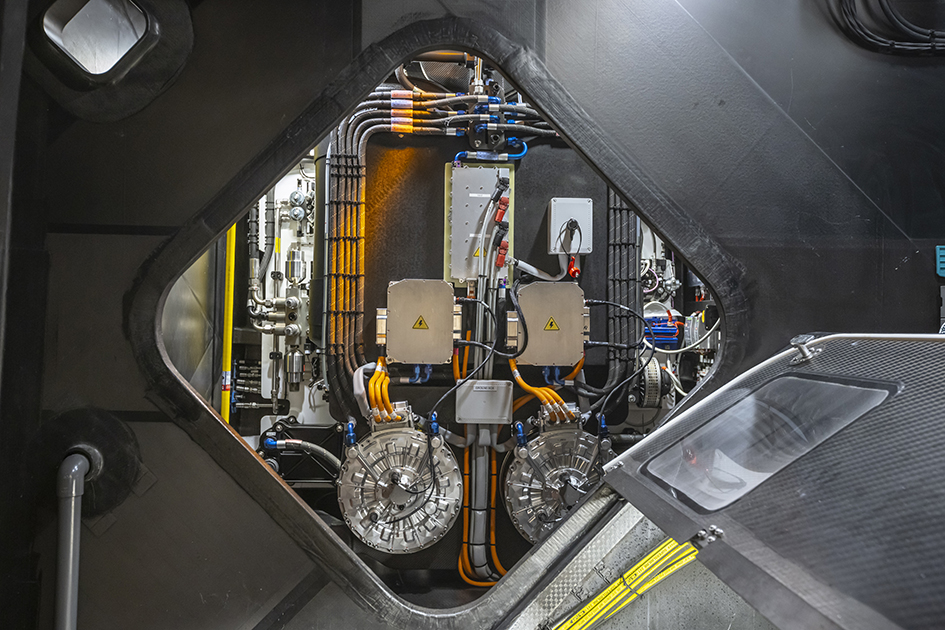
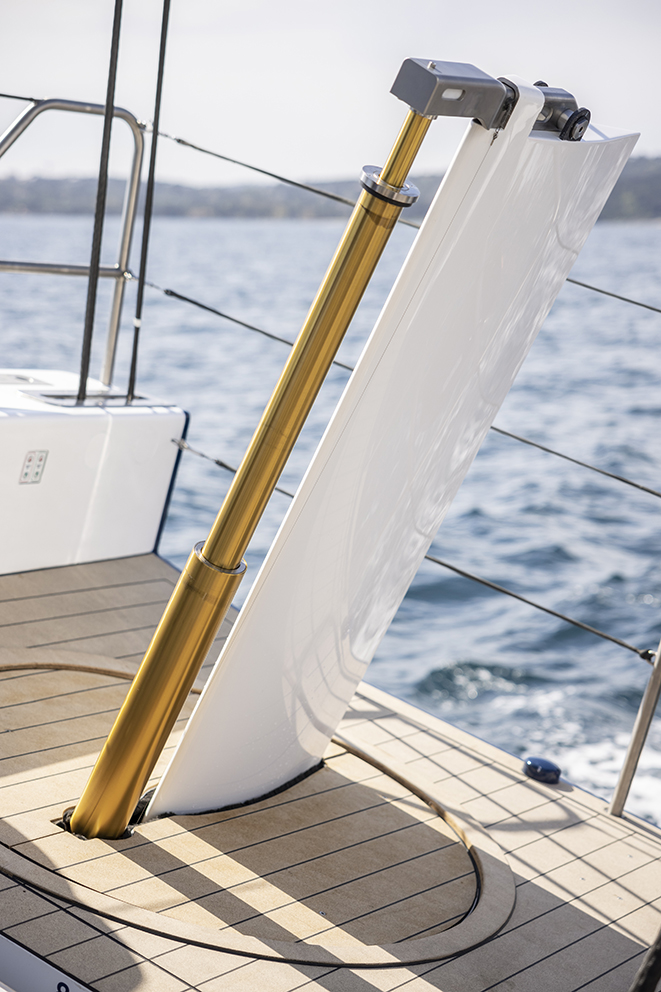
Slightly further aft we come to the keel room, effectively the heart of Magic Carpet e, with the keel-head wet-box, which houses another brilliant and unique engineering system.
MC e has a canting and a swinging keel system, and driving this huge engineering challenge was the need to create a keel system that can reduce its draft from 7 to 4.6-metres.
This was non-negotiable for Sir Lindsay, as he was never going to build a boat that was unable get into St Tropez, or other draft sensitive harbours – posing the question to the team, ‘why have a car if you can’t park it in your garage?’
There are canting/lifting keel systems already sailing out there, but the problem with existing systems is there is significant structure and associated weight demand high up in the boat – often up to deck level, and so continuing with the vertical centre of gravity theme, Guillaume went to work and came up with a canting \swing keel concept, which was presented to Gianni and Pierre Luca from Cariboni.
That collaboration created a masterpiece of engineering, which reduces draft when needed. Basically, a massive titanium cassette houses the fore and aft axis point of the keel fin, with a huge swinging cylinder in place. This cylinder pushes the keel head forwards, rotating it around the axis of the canting cage.
At the bottom of the keel fin is the bulb – but if you swing the keel aft without moving the bulb, the draft remains almost the same – or even greater, with the leading edge of the bulb pointing downwards. What happens onboard Magic Carpet e is that when the fin is swung aft, the bulb also pivots on an axis on the bottom of the fin – remaining horizontal, enabling the draft to be reduced to 4.6 metres when the keel is swing aft 60 degrees. Now just take a quiet moment to think about all the intricate moving parts involved in that process…
All of this of course, has required extremely complex fairing shapes in all the moving areas involved, demanding a lot of time to ensure that everything works. When the keel is swing forward back into its full-depth vertical position, the canting rams then enable the canting of the keel to 45 degrees either side of the centreline.
As Magic Carpet e is predominately an inshore racer, all of these hydraulic cant movements have to happen at race pace.
The Magic Carpet team have always focused on gaining seconds around the race track, and so from full cant 45 degrees one side, to 45 on the other, takes 10 seconds. That is a huge amount of hydraulic oil being moved. This cant and swing solution was such a eureka moment for Guillaume, that the raw materials for this keel system was sourced, secured and ordered even before signing with the Persico shipyard, to get ahead and to make it happen, very much a push-supply philosophy, not a pull one.
Magic Carpet e is an electric boat, and the team believe it is the first high-performance plug-in hybrid racing maxi yacht. There are two electric motors driving the two hydraulic pump trains located onboard, slightly to starboard of the wet box area.
The system is separated for multiple reasons. There is an inbuilt redundancy, as the systems can be run in parallel and independently. Pump two is for the forward section of the boat – the canting keel, the canard systems and mainsheet, and pump one is for the functions aft, the winch system, raising and lowering the rudders, the runners and various smaller systems.
Either pump can manage any role, and these motors were a massive driver in creating a new Magic Carpet. Sir Lindsay gave skipper Danny Gallichan and engineer Ed Bell a challenge four years ago, saying, ‘give me a reason to build a new boat!’ They started looking closer into this during the quieter Covid period, with a lot of conversation on possibilities. Following that, Sir Lindsay asked Ed Bell to dig deep, and do his homework.
The first stage was to run calculations using data from Magic Carpet 3, then the team spoke to key people and came up with a concept that they thought could – and more importantly would work, which Sir Lindsay was both delighted with and excited about. He then tasked them with confirming those numbers.
Through Sir Lindsay’s background in motor sports, the team had access to the best in the business in electronic drive systems. The team approached Williams Advanced Engineering, which at the time were part of the Williams F1 team, but are now owned by the Australian firm Fortescue Zero. Williams looked at the idea and data, and were immediately interested. The zoom call was very lopsided – Ed Bell on one side of the call, and 15 eager technicians from Williams looking and listening in to his presentation, which Ed has confessed was one of the more nerve-racking moments of his career.
Williams were fascinated, and E-Helix, the electronic custom motor supplier involved in F1, Formula E, Extreme E and Lotus Evija hypercar – the world’s fastest electric production car, engaged rapidly in the project and supplied the motors for Magic Carpet e.
These two electric motors weigh 38 kilos each, and have a continuous power output on 150 KW, and considering the diesel engine that would be required to supply that equivalent power would be a large V8 or V12 engine, the weight gains are immediate. On Magic Carpet 3 they were running between 220-250 KW. On Magic Carpet e they are running at 300 KW, but they can peak at 600 KW. Translated into sailing function – flat out, they can pump between five hundred and fifty, and six hundred litres of hydraulic oil per minute, all to facilitate inshore racing.
Just behind the pumps is the large reservoir of hydraulic oil – roughly the size of a household fridge, holding around 150 litres of oil, all of which they move during a gybe – it is really head shaking stuff.
Sir Lindsay is of course fully aware that sail design is ongoing, with stiffer, more unforgiving materials emerging, to provide stronger and more powerful sail shapes, and so he has specified the ability to manage this with the onboard hydraulic systems, future-proofing those systems for years to come. One glance at the boat confirms that Magic Carpet e has a huge J measurement, capable of generating immense power. More on the sails later, but back to the keel room.
On the panel behind the two Helix pumps is a small aluminium board – a little larger than an A4 clipboard, with four plugs in it, and it weighs 6 kilos. To overcome having a small 10kw portable generator onboard during the cruising period to run the AC and house systems, one of the technicians from Williams suggested using the battery stored energy, by using a DC to DC converter, bringing it from 700 volts down to 24 volts, and so this now powers the AC, water maker, and all domestic systems, including freshwater pumps and cooking – meaning that cruising is absolutely silent. And if the vessel is at anchor and the guests leave the boat for a walk or an outing, the range extender can fully recharge the main battery in just 35 minutes.
The nav station is a central feature in the saloon, something designer Axel de Beaufort wanted to create, and which you are presented with as you enter into the boat. It is a futuristic nav station, blended with traditionalism. The chart table is veneered with teak, and finished with the Hermes leather top, and the deeply impressive navigator’s seat was created for one of the world’s finest navigators – Marcel van Triest. This is a carbon monolithic chair, which has thick wedged padded leather sections secured from the seat centreline outwards, like pages in a book.
As the boats heel increases, Marcel just flips the windward side wedge over to the lower side of the seat, to create a level surface to then sit on. The seat is edged with natural cork, which is used on the exterior deck and interior flooring – which is hard wearing and much lighter than teak, and overall, seat is finished in Hermes leather.
Standing next to Marcel, looking at him checking the weather for the sail testing session ahead that morning, my eye wanders to another detail of the interior, the interior cork floor tilling.
Axel de Beaufort wanted to continue the outside look to flow inside the boat, with cork flooring panels when cruising, but for race mode they are swapped out for clear-coat carbon floorboards with non-skid. Why cork I wondered? Well, again form and function take charge. This natural cork really is a beautiful material and hard wearing, and on deck is 4 millimetres thick instead of 7-millimetre teak, which has saved roughly 500 kilos on the deck – another huge weight saving in one adjustment.
Now in the centre of the saloon, I am standing above an incredible piece of technology, the Magic Carpet e battery. This battery from Fortescue Zero was developed from Extreme E technology, and the new cell technology that has been scaled to the requirements for this project.
The battery unit is 2m x 1.1 m x 400 mm and it is positioned below the waterline.
Guillaume was delighted with this – as the battery weighs roughly 650 kilos, and so a key amount of weight, with 101 kilowatt hours of stored power, meaning that its weight impact on the boat’s performance has been minimised. Clearly watertight integrity was vital here, and the team confirmed this by leaving it 1.5 meters down in a swimming pool for a couple of hours, to confirm its IP 68 rating. The battery came with its own IP 67 rating and the inhouse tests lifted that rating to IP 68.
Extreme H constantly use these battery units in deeply challenging environments, racing across deserts, or on expeditions in polar regions and at the end of each day they power-wash the batteries off, so the MC e team had high levels of confidence with waterproof integrity.
To guard against any issues with the lithium battery in what is known as thermal runaway, there are multiple safeguards against that occurring onboard, the final one being that the battery compartment can be flooded with saltwater, to cool the unit but not destroy it.
The galley is also a key area for the crew and any technicians onboard, with a built in PLC control screens system mounted on the engine room side panel, to monitor and control sailing and hydraulic systems onboard, all with advanced load monitoring systems in place. This means that the very aft of the galley – which just happens to be right next to the coffee machine, is in effect, Ed Bell’s office, allowing him to review all data post racing.
With the boats cruising capabilities, the galley was also designed to allow the chef onboard to create fine dining for friends and family, and so is fully equipped and furnished with cooker, fridge, freezer and significant headroom, with the light white deckhead surface the underside of the cockpit. All this means Magic Carpet e could be a liveaboard yacht if Sir Lindsay wished.
What is next, leading in from a side access panel from the galley, is really quite extraordinary – the engine room, with its electric propulsion system.
This drives the boat through the water, using a ship motion retractable propulsion system, using exactly the same diameter Helix motor used to drive the hydraulic pumps, meaning continuity amongst the equipment onboard. The only difference with this propulsion unit is that it has a longer stack length, as they need 1,000 newton metres of torque for the required speeds, during deliveries. In this engine room space (really without an actual engine…) also lives the range extender, which can be easily removed when racing.
The boat has been training and sailing for five weeks without needing the range extender, and so its presence onboard will only be for fast charging at the end of a day, or for extended motoring on long deliveries, maintaining the battery state of charge and allow Magic Carpet e to motor at ten knots for 48 hours. On arrival at an event, the boat plugs in to a shore power and recharges overnight. Any potential problems with any shore power locations and the range extender can be utilised.
One of the key things this programme highlights, is that the automotive sector is struggling with infrastructure to support electric vehicles, but the marine sector has always had an electrical power infrastructure on docks and marinas worldwide, and so that adaptation has been straightforward. Magic Carpet e project is probably the first occasion where the marine sector has launched something more advanced than the automotive sector.
The battery technology used from Fortescue Zero has not entered the mainstream automotive market yet, and so sectors across the marine market and maxi yachts in particular, have the opportunity to help spearhead this revolution.
-

Advertisement
-
Advertisement
-

Advertisement
