

Ballina tragedy
The tight-knit coastal community of Ballina has been rocked by a fatal capsize and rescue operation that claimed the lives of three people.
Photography by Marine Rescue NSW
07 May 2026

Advertisement
Three people died, including two volunteer rescue personnel, after a yacht sank and a rescue boat rolled in choppy conditions at Ballina, on the NSW north coast.
Emergency services were called at 18:15 on Monday 4 May after a member of the public reported a yacht in trouble off the break wall in South Ballina.
NSW Police Marine Area Command Superintendent Joe McNulty said there had been no distress call, EPIRB activation or flares from the yacht.
Following the “good Samaritan” report, six volunteers from Marine Rescue NSW launched in response. Superintendent McNulty described conditions at the bar as “extremely treacherous” at the time, with the swell up to five metres.

Advertisement
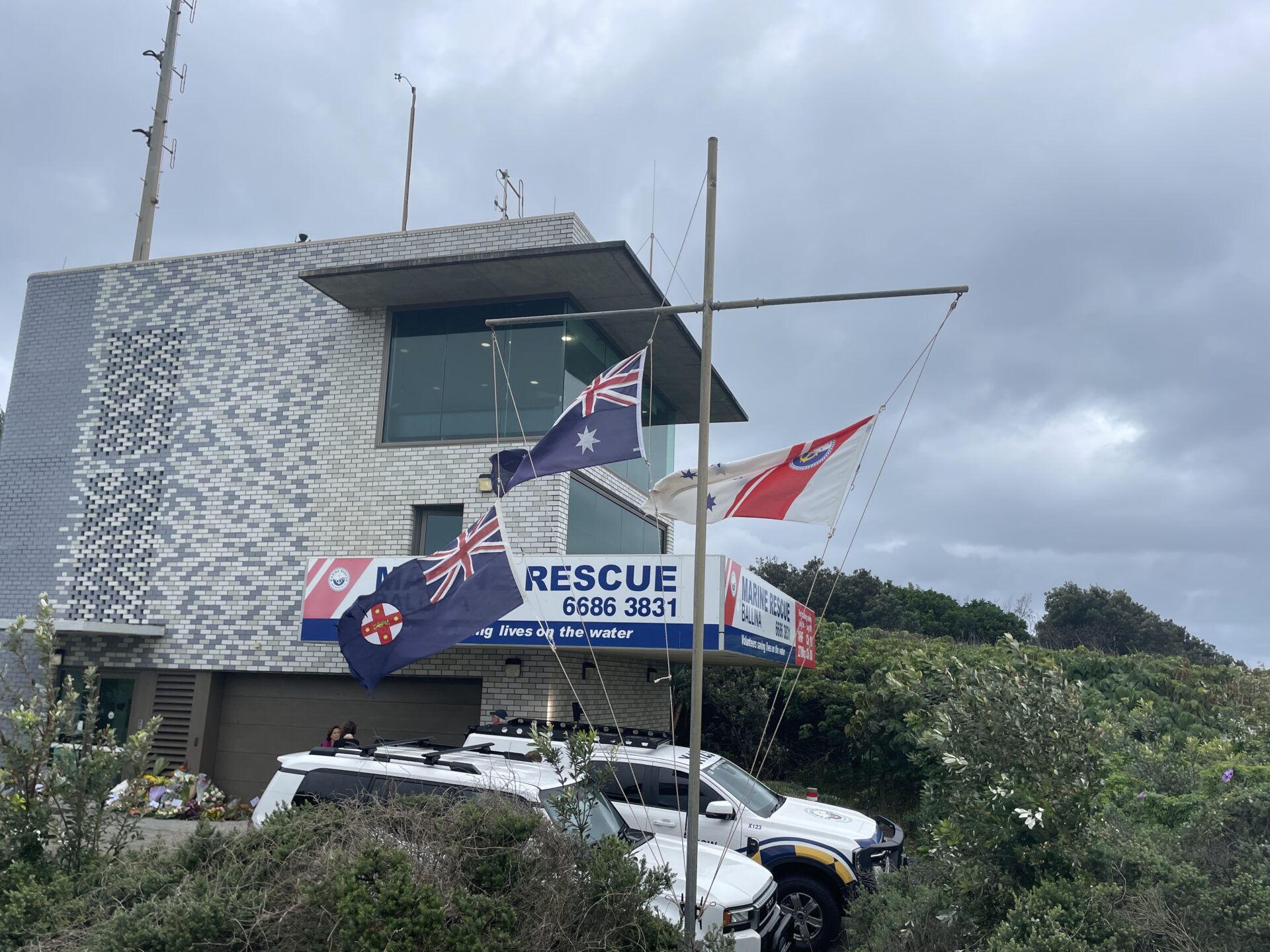
The Marine Rescue vessel capsized while attempting to assist the yacht. Some crew members were thrown into the water, while others became trapped inside the hull.
Four volunteers survived and were taken to hospital with injuries. Among them was Ballina’s Citizen of the Year, Captain Geoff Hutchinson, who suffered serious injuries including broken ribs and a fractured leg and is expected to remain in hospital for several days.
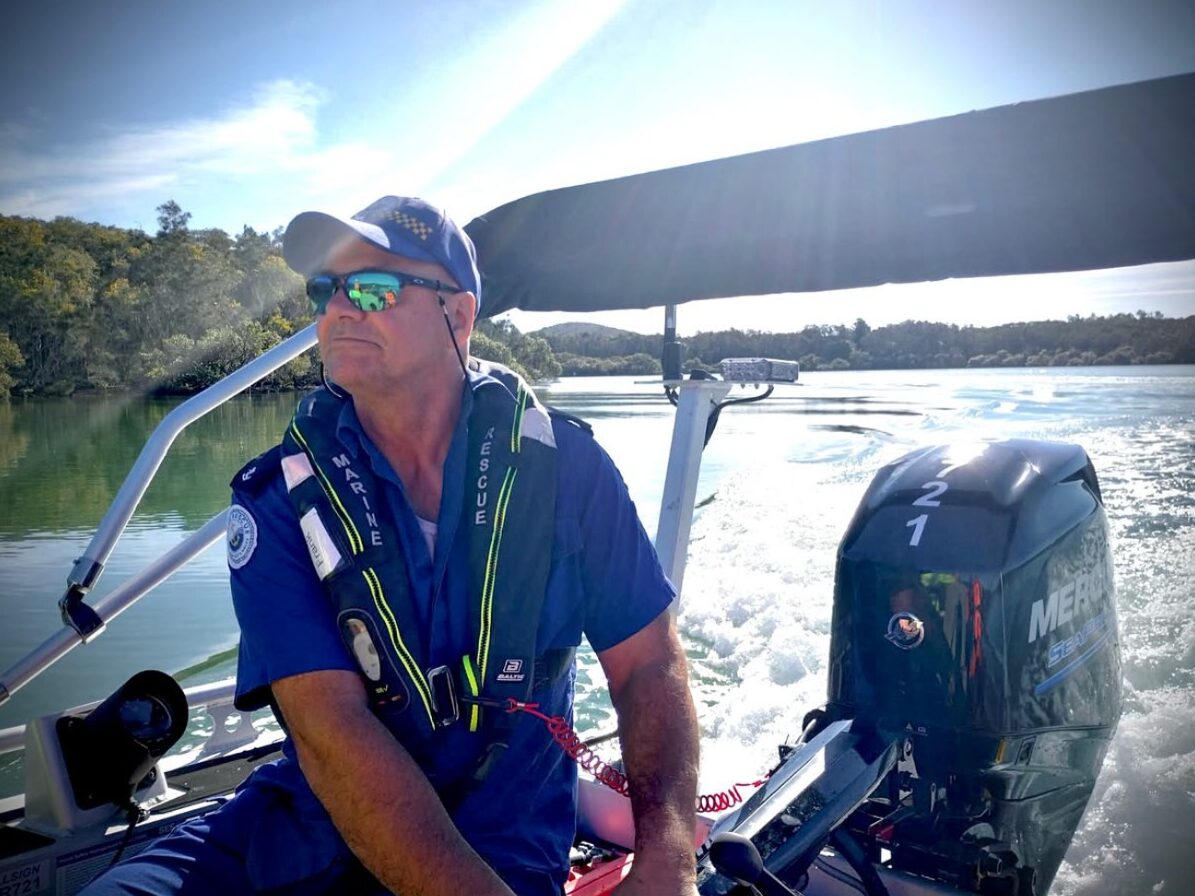
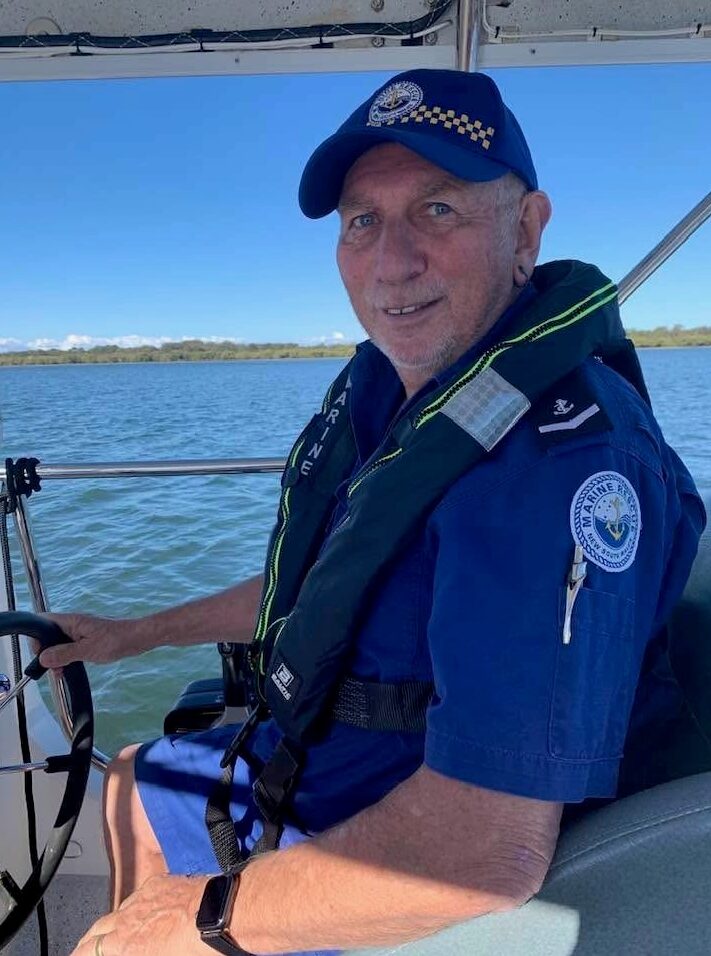
The two volunteers from Marine Rescue Ballina who lost their lives were 78-year-old William (Bill) Ewen and 62-year-old Frank Petsch.
Bill Ewen had nearly 10 years of service with Marine Rescue Ballina after joining in February 2017 and was a highly respected crew member.
Frank Petsch joined the unit in January 2024 and progressed to the rating of Coxswain (Restricted).
Marine Rescue Ballina Unit Commander Peter Hill said both men are heroes and their contribution to Service and the local boating community will never be forgotten and provided an updated on the volunteers in hospital.
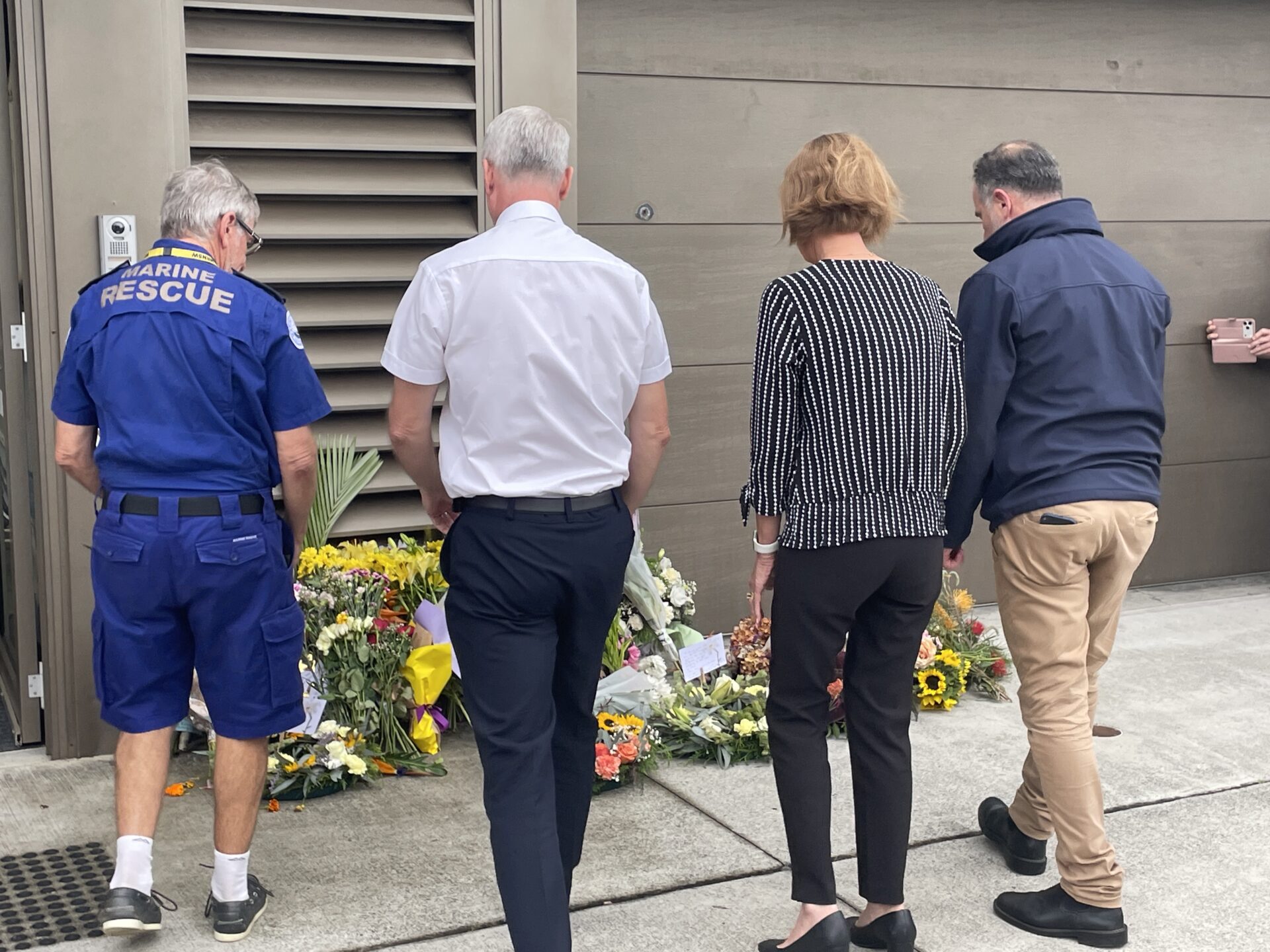
Emergency Services Minister Jihad Dib met with volunteers at the unit on Wednesday morning and was among those who laid flowers at a memorial site on the breakwall.
Minister Dib drew attention to a tribute that carried a simple message: “So others may live”.
“In the worst of times, we see the best of people,” he said. “We’re standing here today to honour the best of our people.
These are volunteers who go out into danger to do no more than to protect the community, [and] what we have seen is Frank and Bill have paid the ultimate sacrifice.”
He committed to a replacement vessel, following the loss of the BA30.
“There will be a replacement boat,” he said. “In the meantime, there will be an interim solution so this community is not left without coverage.”
The minister said the long-running issue of dredging at the Ballina Bar would also be examined as part of the broader investigation into the incident.
“That’s one of the things that will come up,” Mr Dib commented. “It will need to be looked at as part of the discussion about what happened.”
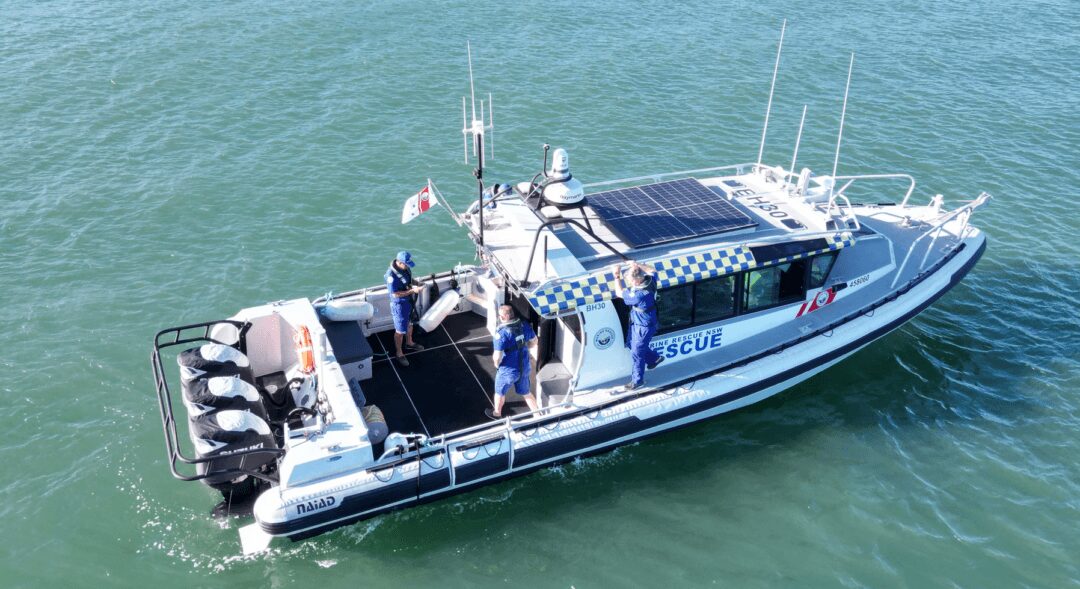
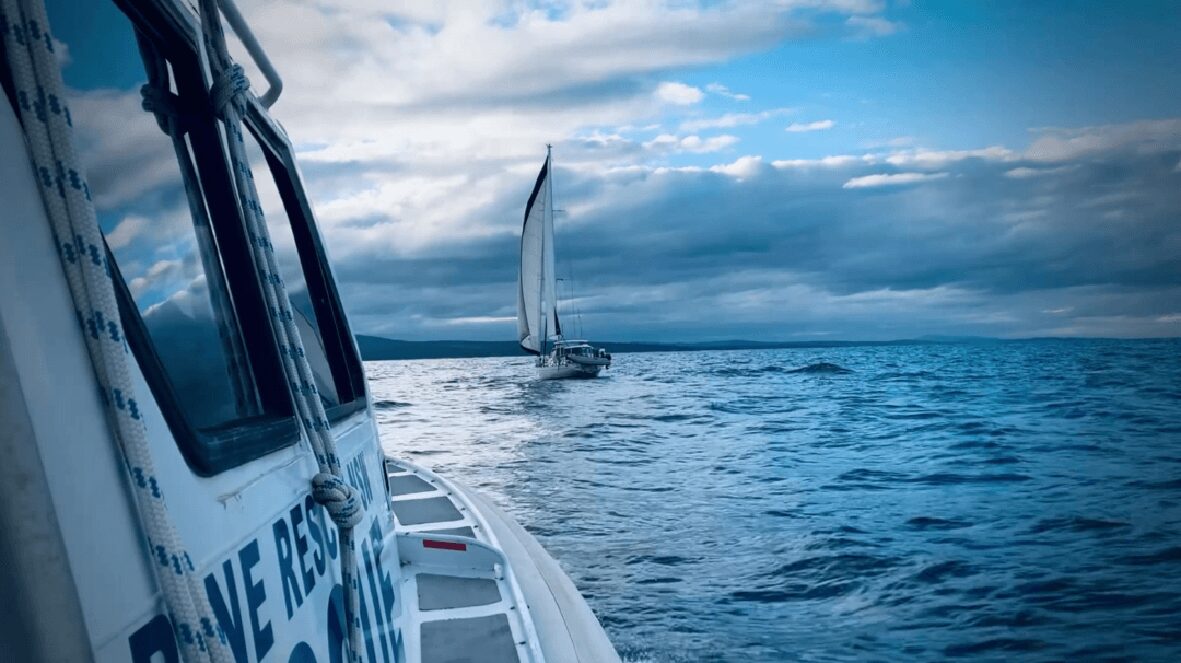
According to Marine Rescue figures, more than 7,000 people were safely returned to shore by Marine Rescue NSW volunteers during the 2025/26 boating season.
Marine Rescue NSW Commissioner Todd Andrews said the death of two rescuers was a solemn reminder of the risks faced by volunteers.
“These two men were serving their local community and have made the ultimate sacrifice to help others,” he said.
He praised the commitment of volunteers across the Service’s 46 units, highlighting their vital role in keeping NSW boaters safe.
“Volunteers are the backbone of Marine Rescue NSW, giving their time, skills and experience to help ensure people return home safely,” he added.
The vessel is expected to be salvaged as part of the ongoing investigation by police and maritime authorities.
Mr Andrews said the organisation’s immediate focus remained on supporting volunteers and families, with counselling services and psychological support now in place.
The family of William (Bill) Ewen released the following statement: Bill was a devoted family man who was incredibly proud to serve his community as a member of the Marine Rescue Ballina.
“We are devastated at the loss of a much-loved husband, father and grandfather, but take comfort from knowing that he passed doing something he loved. We are so proud of him.
“Our thoughts are with the entire crew and families involved, and we extend our sincere thanks to the first responders. We respectfully request privacy at this time to mourn our Bill.”
Marine Rescue NSW is a volunteer‑based, not‑for‑profit professional organisation dedicated to keeping boaters safe across the state.
Its 3,500 trained volunteers support communities through search and rescue operations, marine radio monitoring and boating safety education.
Marine Rescue NSW keeps boaties safe by providing a 24/7 emergency response, monitoring radio channels, and operating a free “Log On/Log Off” service for tracking. Volunteers use specialised rescue vessels to provide tows and rescue in emergencies, while also offering weather updates, safety, and education, such as encouraging lifejackets and ensuring proper safety equipment.
Marine Rescue NSW radio operators handled 132,031 radio calls during the 2025/26 season, with many managed through the Marine Rescue Sydney State Communications Centre at Belrose.
Among those were 75 MAYDAY distress calls involving immediate danger to life, alongside 42 PAN PAN calls from boaters facing urgent but non-life-threatening situations.
Logging On with Marine Rescue NSW remained a critical safety tool, with volunteers monitoring 170,608 people on board 46,824 Logged On vessels.
Commissioner Andrews urged all boaters to make Logging On part of every trip.
I strongly encourage all boaters to Log On before heading out, either through the free app or via VHF Channel 16. It is a simple safety step that allows our radio operators to monitor your journey and act quickly if something goes wrong.
“During an emergency, every minute matters. Logging On gives rescuers a vital head start,” he said.
The NSW government provides major funding for infrastructure, rescue vessels, and training, with significant recent investment for rescue capabilities. The service relies on donations, bequests, and fundraising by local units to support operational costs, as well as sponsorship from corporate partners and local businesses.
You can donate to this vital volunteer service here: marinerescuensw.com.au/support-us
-

Advertisement
-

Advertisement
-

Advertisement
