

Beyond boundaries
How SailGP’s female athletes are propelling the sport forward and paving a pathway for more women in the sport.
15 March 2026

Advertisement
SailGP is accelerating gender equity through its Women’s Pathway, launched in 2021, ensuring women race on high-performance F50 catamarans.
Teams must include at least one female athlete per race, usually as strategists or grinders, with the long-term goal of fostering top-tier female talent in a historically male-dominated sport.
When the first F50s lined up on the start line of the Rolex SailGP Championship, the vision was simple: the fastest, most compelling racing in sailing.
Today, that ambition sits alongside another equally important mission: a gender-equitable league, with female athletes in key F50 control roles, helping reshape the face of high-performance sailing.
Advertisement
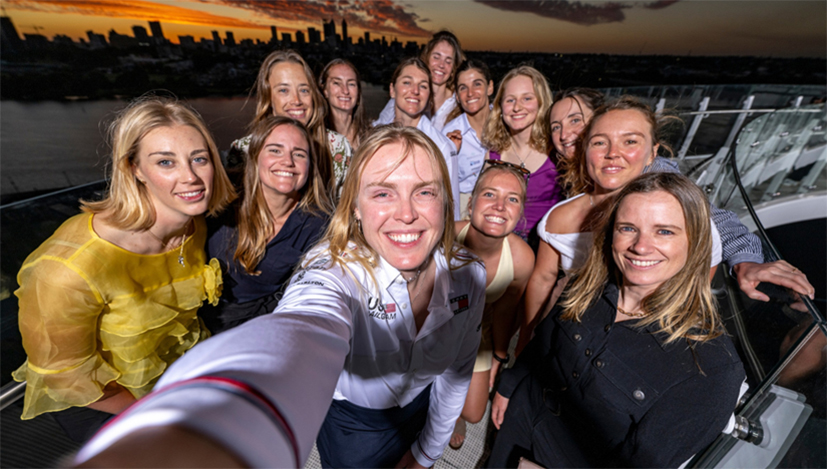
The change has already begun to take shape on the water.
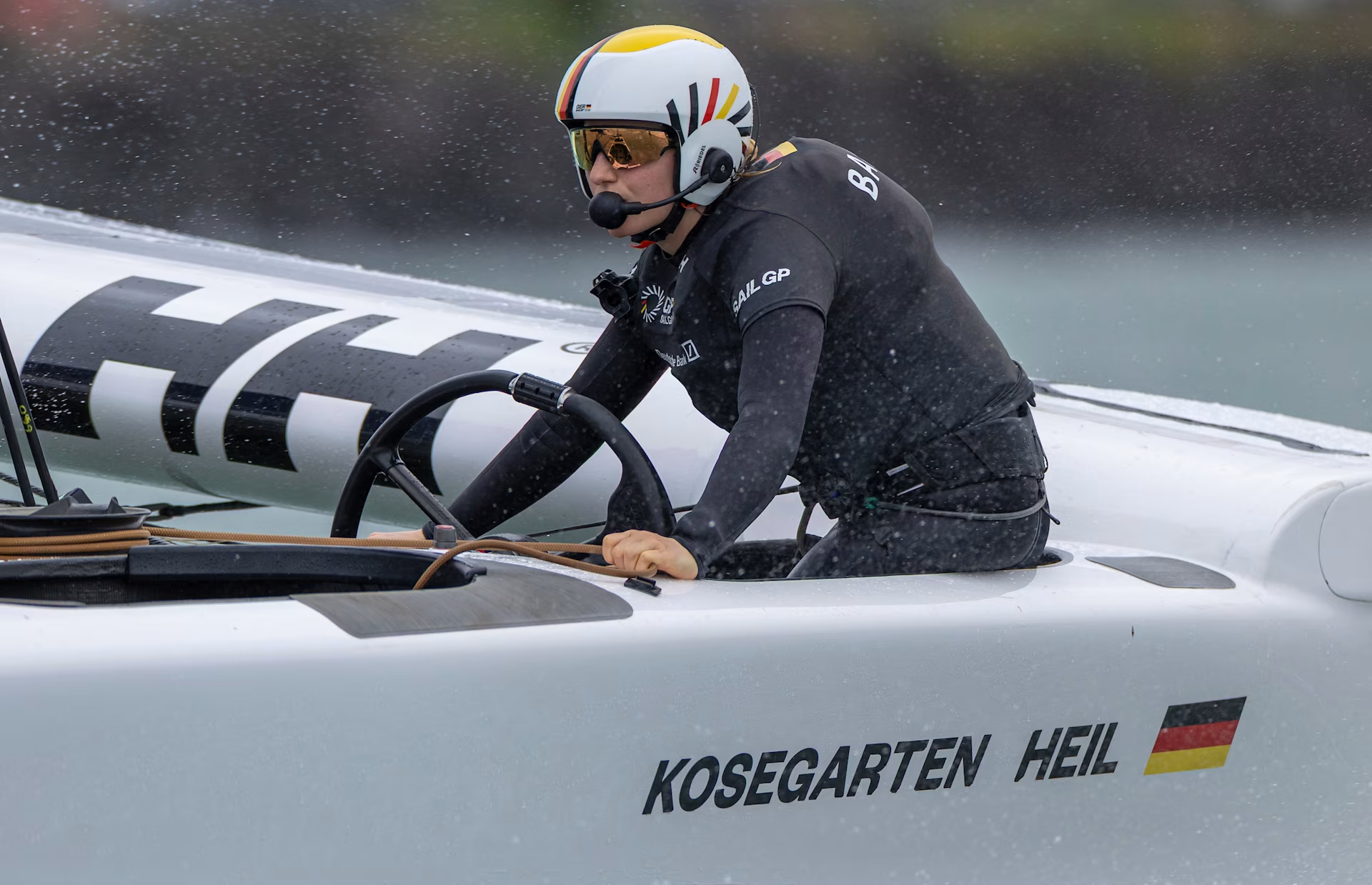
For Anna Barth, strategist for the Germany SailGP Team presented by Deutsche Bank, the difference between watching SailGP and competing in it has been striking.
“Five years ago, I was still a teenager watching SailGP from the outside,” she says.
When I joined in 2023 at 19, it already felt like the door had opened much wider for female sailors. Now, at 21, it feels normal to see women racing at this level and contributing directly to performance.”
Barth points to the league’s female athlete requirement as a crucial catalyst, but says the conversation quickly shifted from representation to results.
“The requirement created the opportunity,” she explains. “But what has been really positive is how quickly it became about performance. Once you’re out racing, everyone just wants to perform at their best.”
From pathway to performance
Liv Mackay, strategist for the New Zealand SailGP Team, says the evolution has been particularly clear.
“It’s completely changed,” says Mackay, 26. “At the beginning it was more about the pathway piece and now it’s really a performance program.
“It feels like each female athlete is an integral part of every team.”
Mackay believes the league has moved beyond simply creating opportunities to embedding women firmly within the competitive environment.
“There’s the consistent athlete and teams are really building out those reserve roles as well, which makes it a hugely valuable position,” she says.
“We’re seeing Martine [Grael, Mubadala Brazil driver] and potentially more female drivers coming into the league and in other roles, so you can see a true shift in how people are looking at women at the highest level of the sport.”
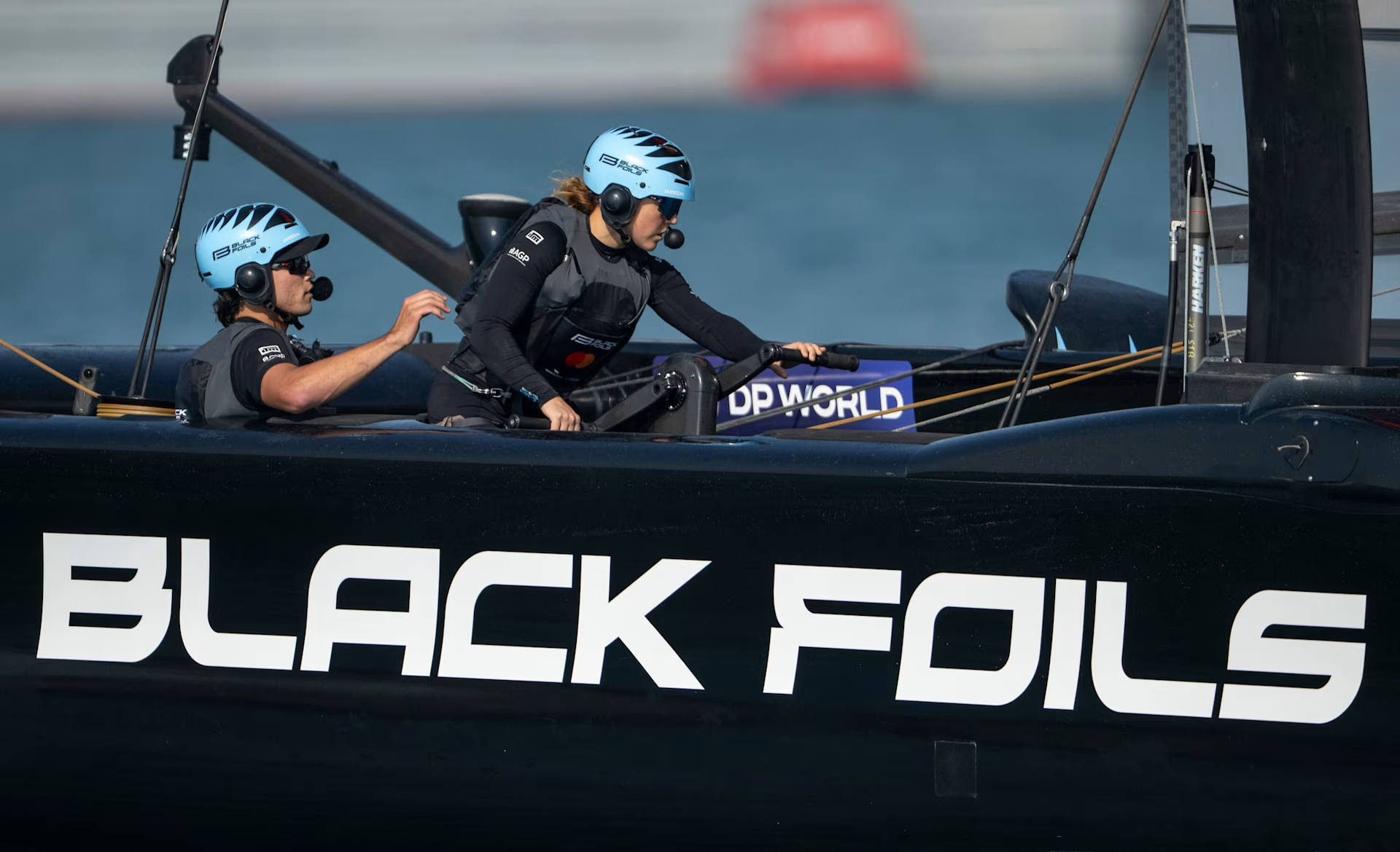
The change has also been felt within team dynamics.
“In the early days you sometimes saw teams where the female role was changing a lot and there wasn’t necessarily the desire to give them much responsibility onboard,” Mackay explains. “That has completely changed. I don’t really see that anymore.”
From visibility to opportunity
While the fleet continues to grow, SailGP has also invested in creating a broader pathway for female athletes.
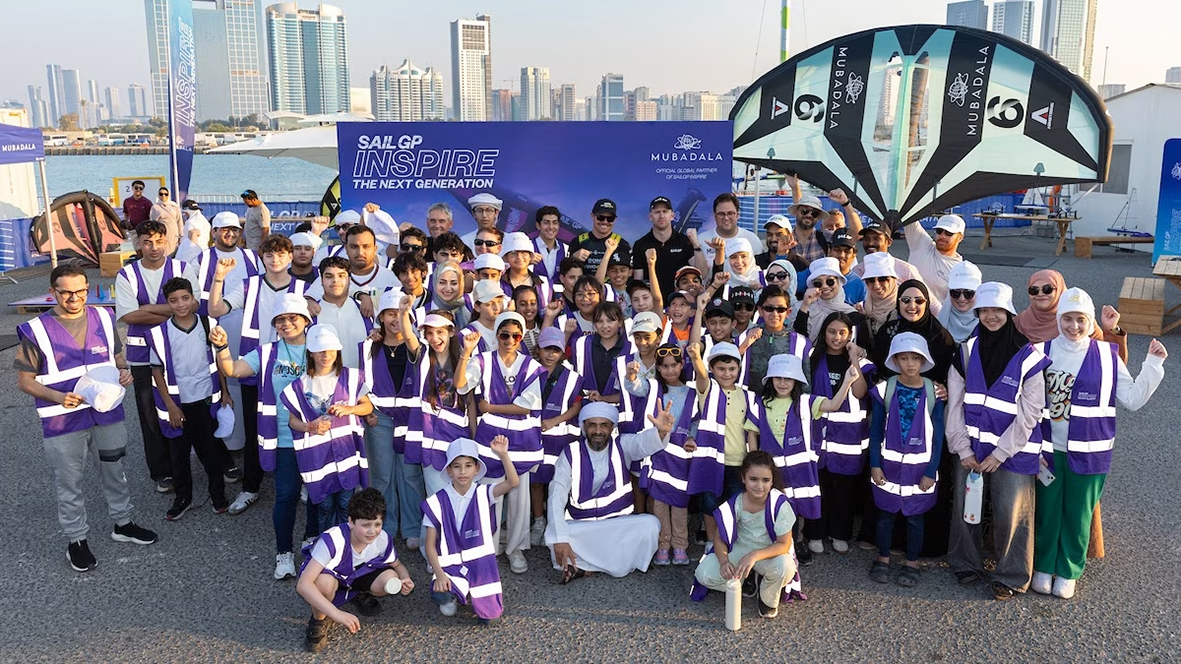
Development initiatives such as SailGP Inspire, which introduces young people to sailing and careers in the sport, help expand the talent pipeline. Alongside it, initiatives like the SailGP Women’s Performance Program provide intensive on-water training opportunities designed to build the skills required to race F50s at the highest level.
Away from the racecourse, the SailGP Women’s Accelerator Program, delivered in partnership with Apex Group, aims to increase female representation in leadership roles across the league and the wider sport.
Together, these programs are designed to address one of sailing’s biggest challenges: experience.
A generation building the bridge
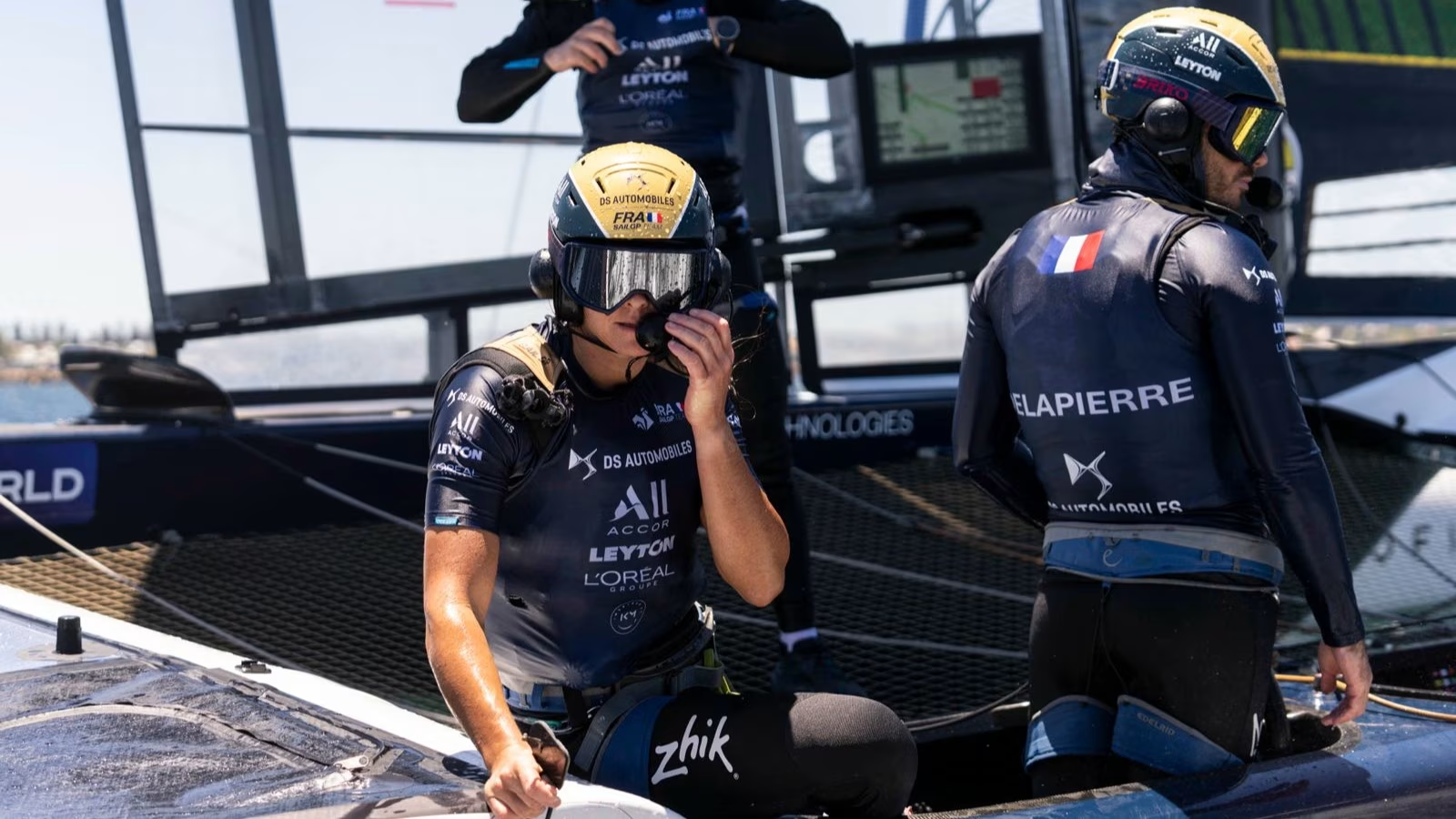
Amélie Riou, reserve strategist for DS Automobiles SailGP Team France, says female athletes currently racing in SailGP occupy a pivotal place in that journey.
I think we’re part of a kind of transition generation,” she says. “A stepping-stone generation. Hopefully those coming after us will have more opportunities and easier access to these projects.”
Riou, 33, believes the next stage of progress will come when more women move into the most technical positions onboard.
“There’s still room for progress,” she says. “Roles like helming, wing trimming, flight control or grinding becoming more accessible would make a big difference.”
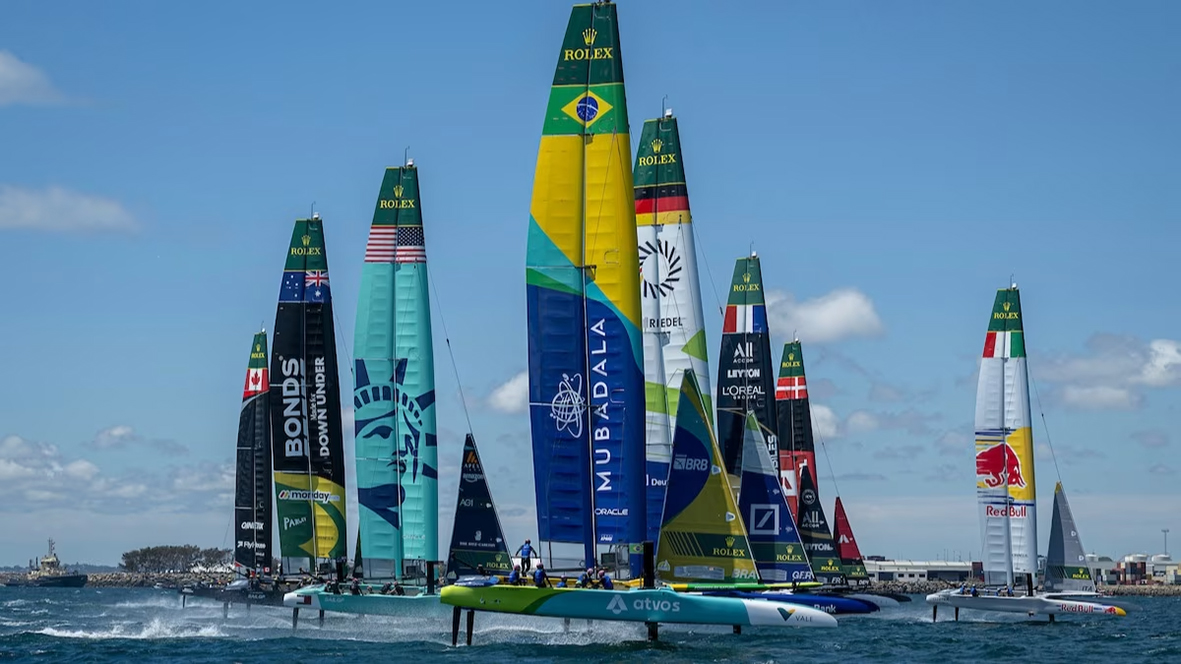
The arrival of Martine Grael as driver of the Mubadala Brazil SailGP Team has already shown what that future might look like.
“When the Brazil team was announced with Martine as driver, that felt like real progress,” says Barth. “It’s important that younger female sailors see this and realize it’s possible.”
More than medals
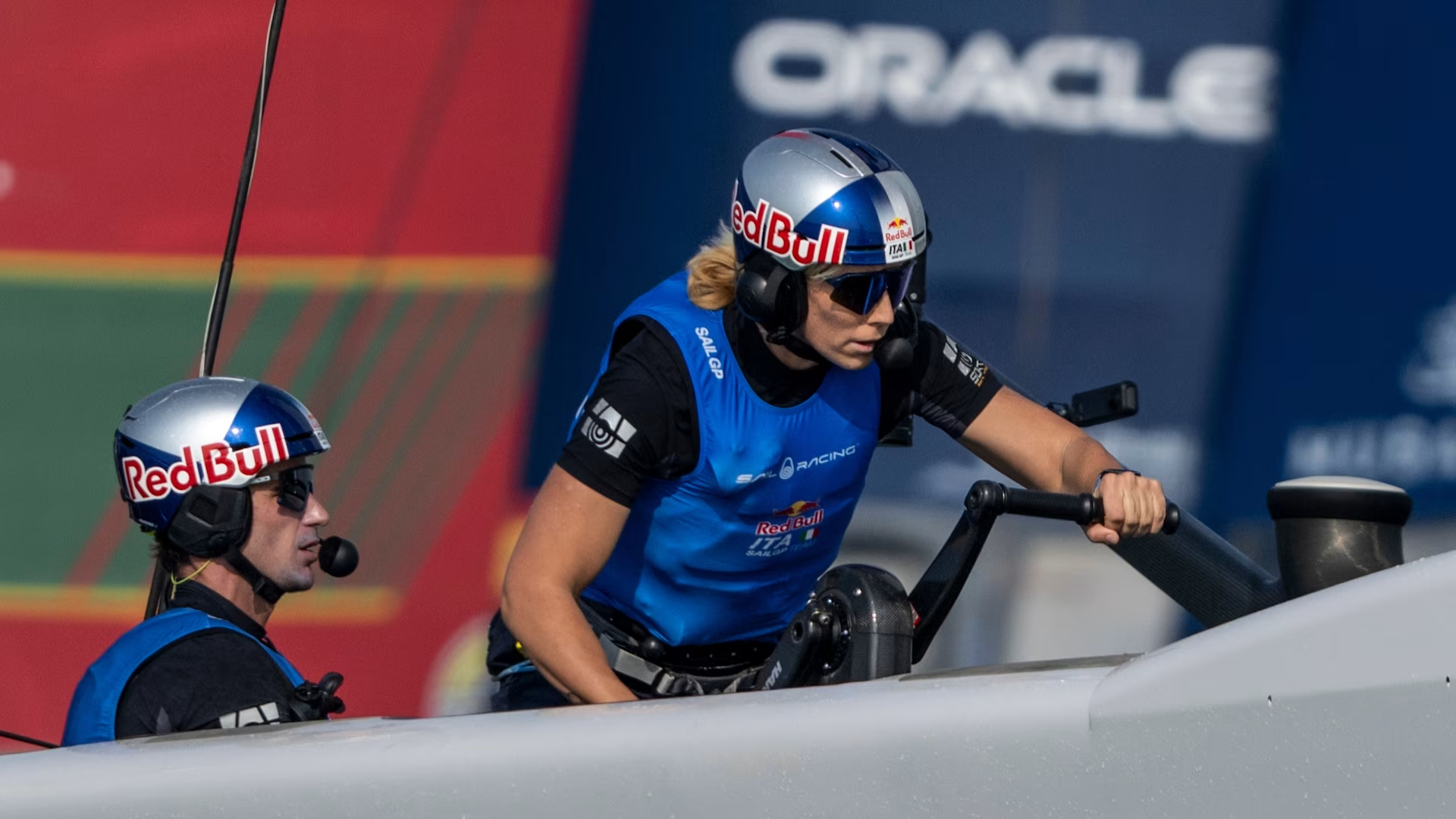
For Jana Germani, strategist for the Red Bull Italy SailGP Team, the meaning of success extends well beyond the podium.
“Being a female sailor in SailGP feels like being part of the journey of growth and empowerment for women in sailing,” the 26-year-old says.
I try to be a role model for young girls out there. Part of success is winning, of course, but another part is being respected and considered equally important as the rest of the team.”
The next horizon
Looking ahead to the end of the decade, Barth hopes female participation in F50 control roles continues to grow.
“If it becomes normal to see women in many different roles across SailGP teams,” she says, “and if young sailors grow up believing they can be part of it too, that would be real progress.”
Mackay believes the ultimate goal is a sport where gender is no longer a consideration when selecting the best athletes.
“The nirvana would be having no need for rules,” she says. “A real 50-50 split at the highest level, where there’s just an equal pool of athletes and teams simply choose the best person for the role.”
The ENEL Rio Sail Grand Prix will take place on 11 & 12 April and mark the league’s first ever visit to South America. The fourth event of the 2026 Season will see home team Mubadala Brazil – driven by Rio local Martine Grael – take on the F50 fleet for glory on home waters.
There are still ticket options available for fans wanting to watch the league’s action-packed racing entertainment in Rio de Janeiro. Grab your tickets HERE.
-

Advertisement
-

Advertisement
-

Advertisement
