

Fleet finds its feet
The 16-strong Golden Globe Race fleet faces first Biscay test.
Photography by Golden Globe Race
10 September 2026
Sixteen solo skippers are settling into life at sea in the 2026 McIntyre Golden Globe Race, with strong headwinds, rough seas and early repairs providing an immediate test after an emotional departure from Les Sables-d’Olonne.
The 2026 McIntyre Golden Globe Race is underway, with 16 solo sailors beginning an approximately 30,000-nautical-mile, non-stop circumnavigation after departing Les Sables-d’Olonne, France, on Sunday 6 September.
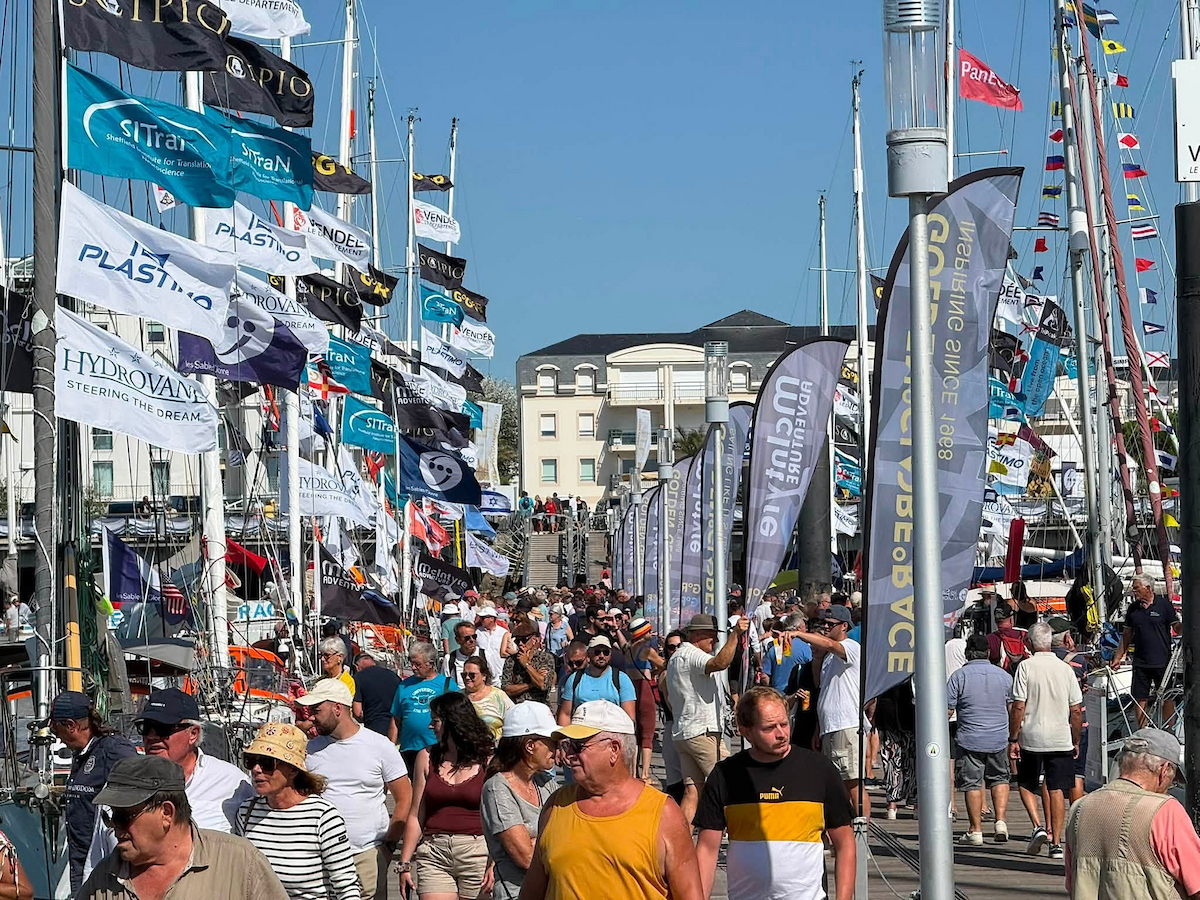
Thousands of supporters lined the harbour channel to farewell the fleet before the sailors headed into the Atlantic for what is expected to be a seven-to-eight-month voyage.

Advertisement
The Golden Globe Race is deliberately different from contemporary ocean racing. Competitors sail older-style production yachts using traditional navigation, without GPS or electronic weather routing, on a course that takes them around the Cape of Good Hope, Cape Leeuwin and Cape Horn before returning to Les Sables-d’Olonne.
Historic farewell
The final days ashore combined safety inspections and briefings with a series of events celebrating the race’s history.
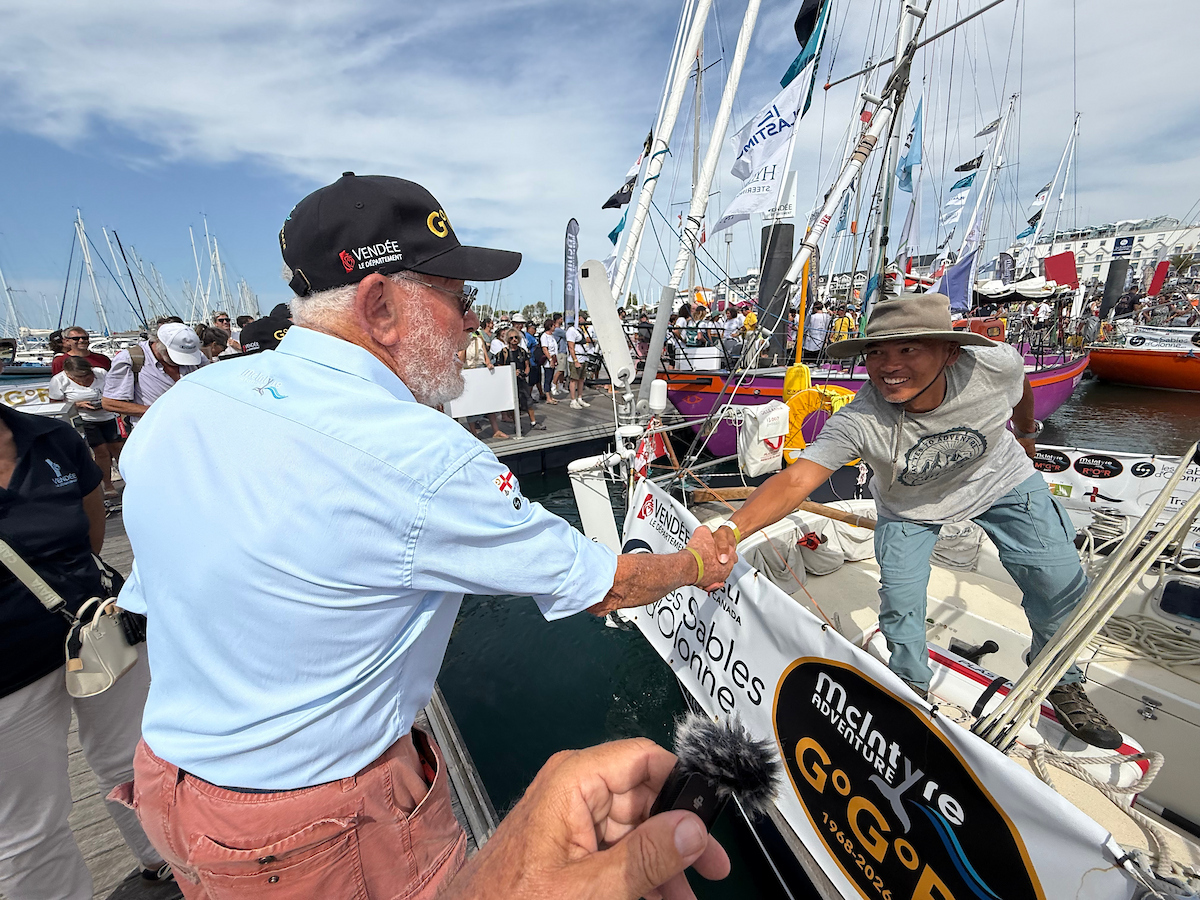
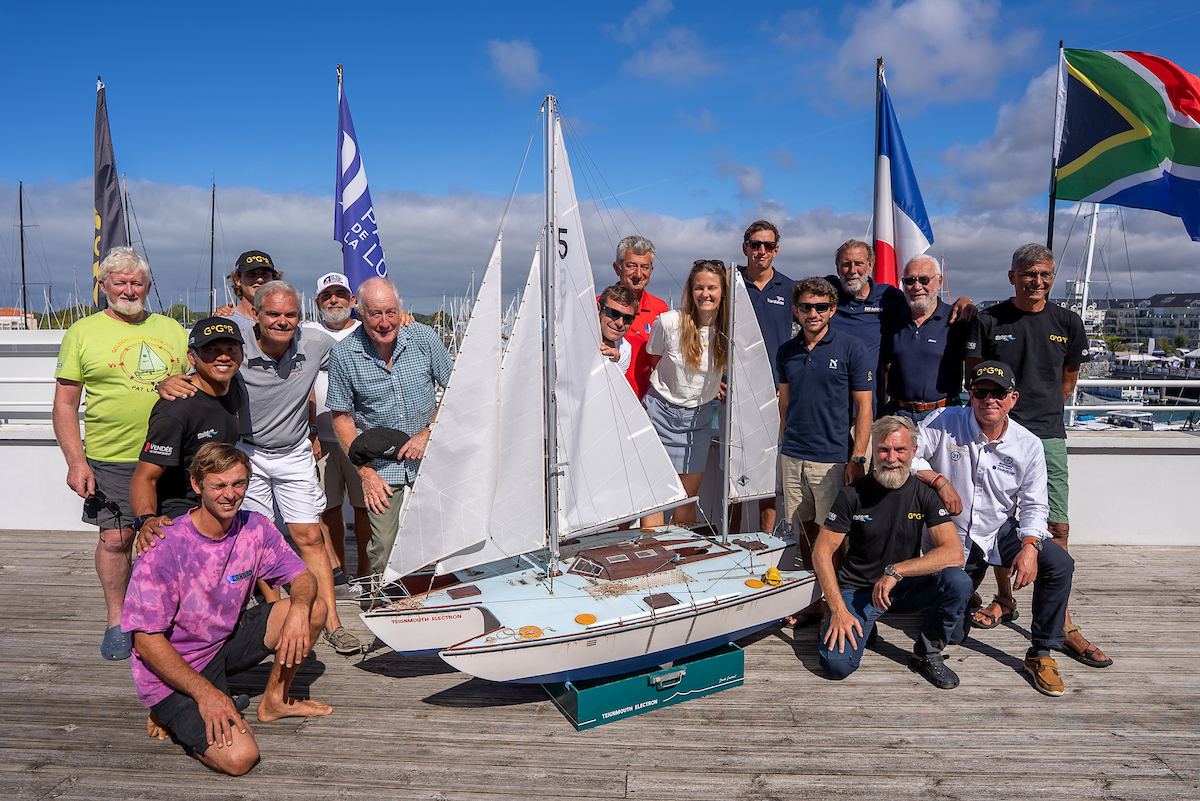
Sir Robin Knox-Johnston, the only finisher of the original 1968–69 Sunday Times Golden Globe Race aboard Suhaili, attended the Captains’ Dinner and gave each of the 16 skippers a final handshake before they left the dock.
The 2026 event also remembered Donald Crowhurst, whose story remains an enduring part of the original race. His son Simon Crowhurst presented the official commemorative coin to this year’s entrants.
A parade of sail brought together historic and traditional craft, including the locally built Viking replica Olaf d’Olonne, the Swan 57 Explorer and Bernard Moitessier’s famous ketch Joshua, along with around 25 wooden Olonnois boats.
Light winds give way to Biscay conditions
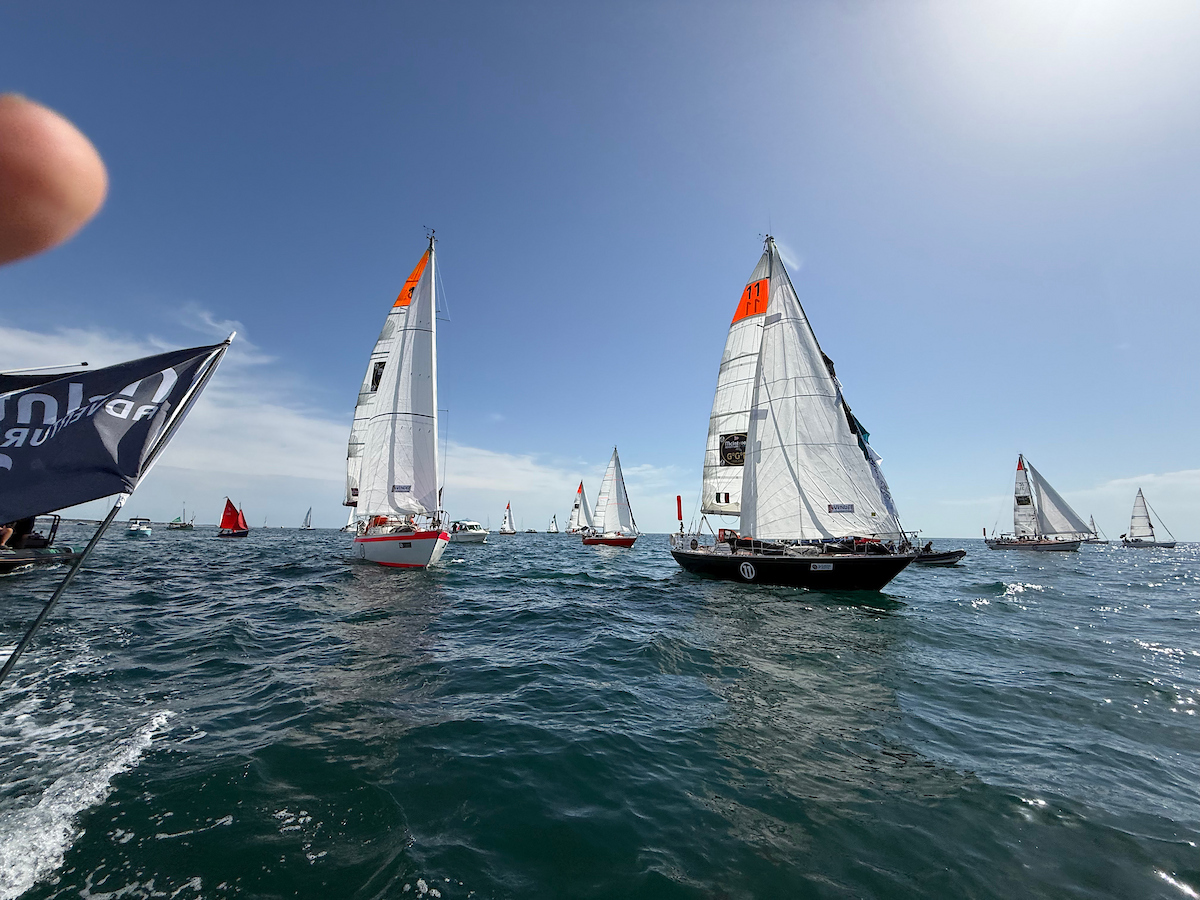
The fleet initially faced barely enough breeze to fill the sails as it completed a short coastal course before heading offshore.
Britain’s Henry Wootton, sailing the Cape George 36 Privateer, was first around the final mark.
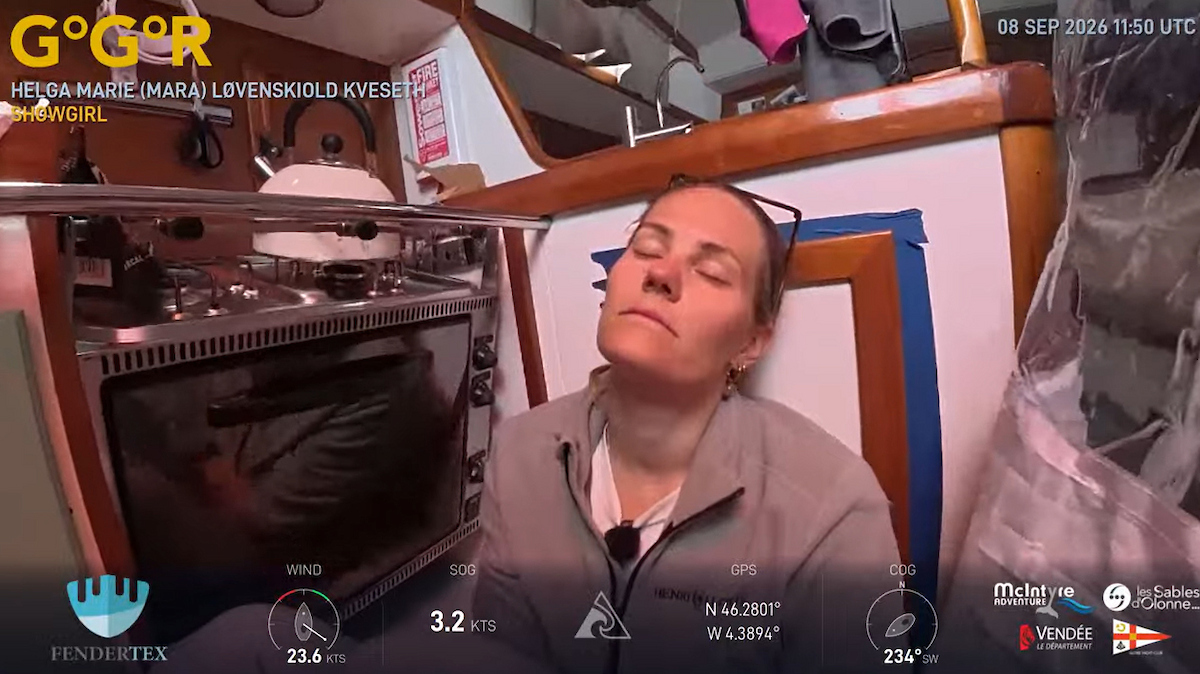
Conditions soon changed. The breeze strengthened after the first night and, by Tuesday morning, the fleet was encountering southwesterly winds of 25–35 knots and seas around three metres as the skippers worked their way across the Bay of Biscay.
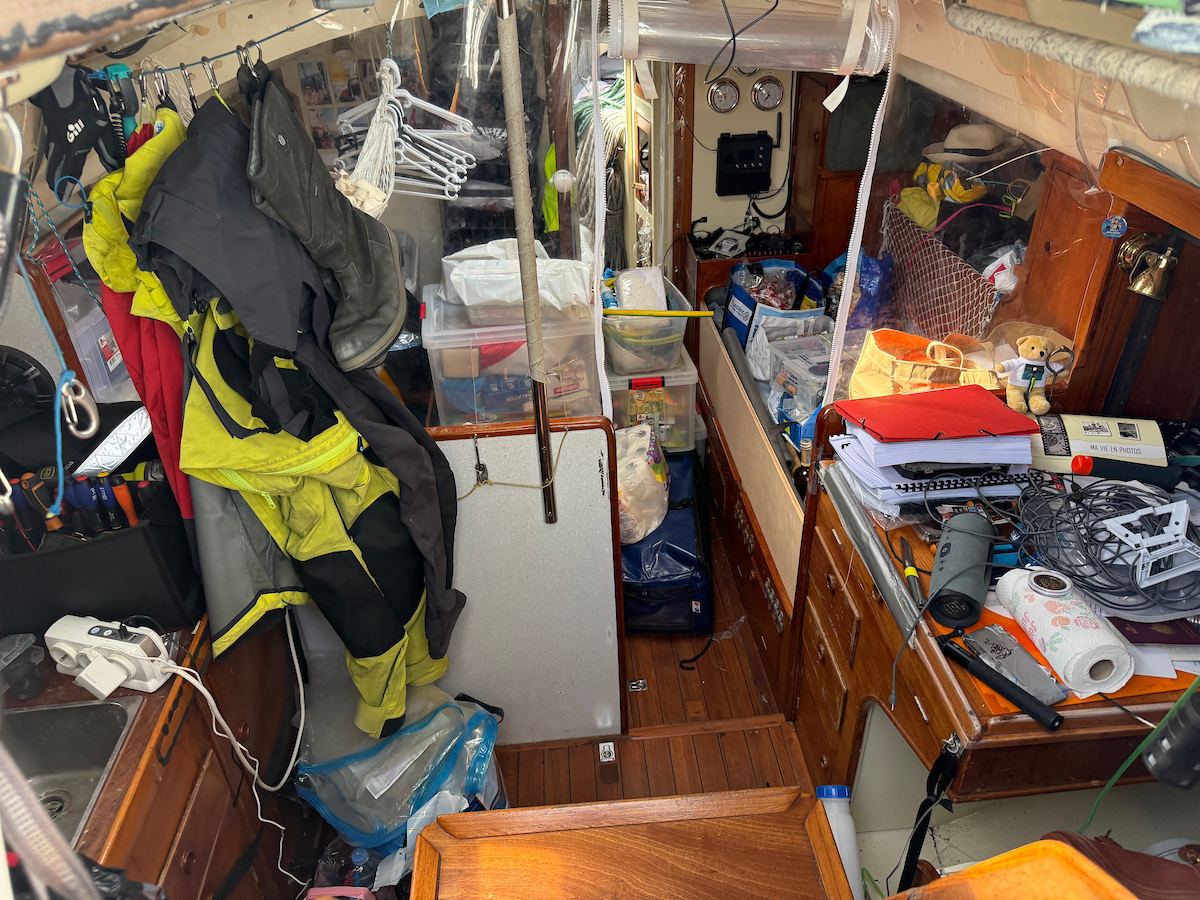
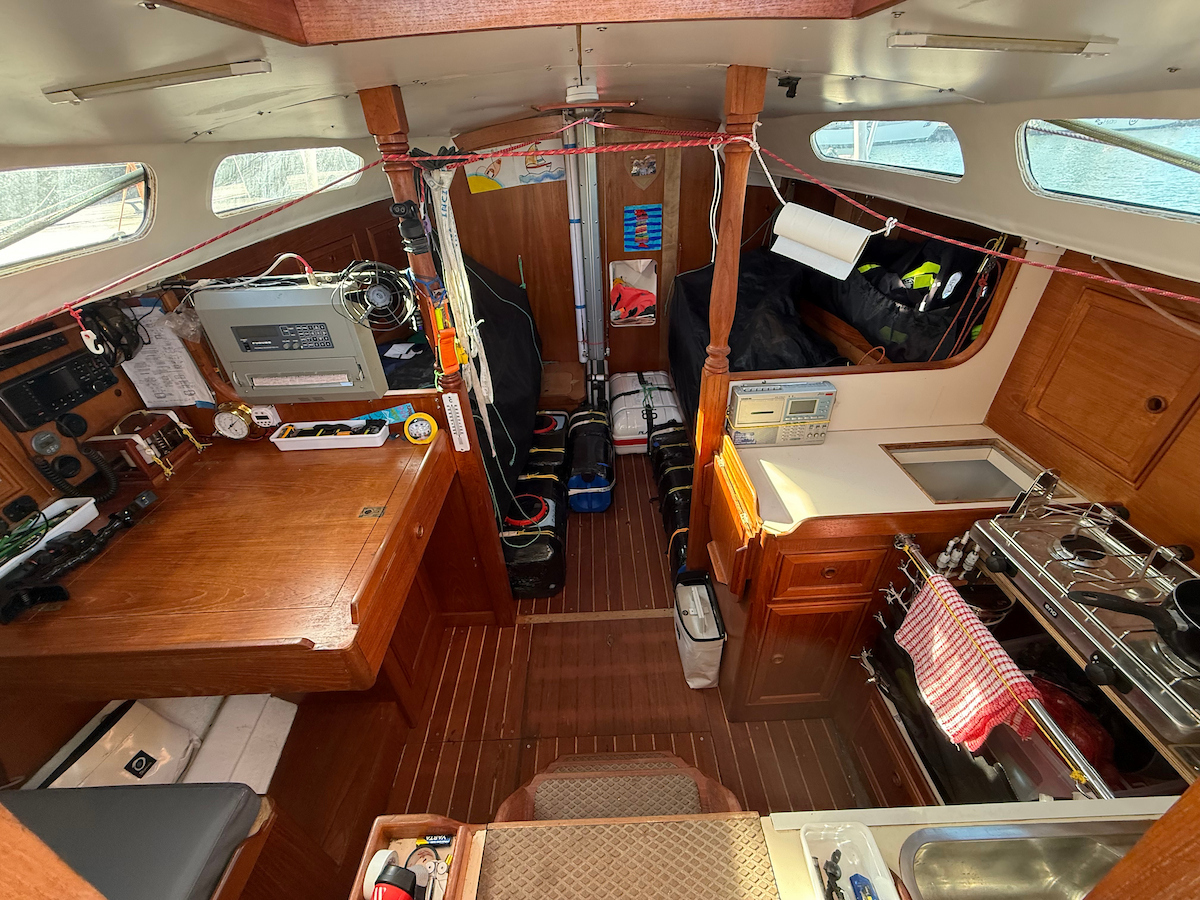
Seasickness and leaks were already being reported across the fleet.
At 12:00 UTC on Tuesday 8 September, France’s Damien Guillou was leading aboard the Rustler 36 Solarem after taking a more southerly route.
The fleet had split between northern and southern options as the sailors attempted to negotiate both the strong headwinds and an approaching high-pressure system.
“Getting out of the Bay of Biscay is always a struggle,” said Golden Globe Race founder and chairman Don McIntyre. “The first boats around may suddenly jump ahead of the fleet by a day or two.”
Early repairs for GGR fleet
The opening miles have also produced the first technical problems.
Sweden’s Pär Nyman returned to Les Sables-d’Olonne aboard the Rustler 36 Lazy Otter after losing a critical rigging component before the start and subsequently discovering a rudder problem offshore.
A haul-out revealed a broken bolt, with another snapping during removal. Repairs were underway, with Nyman hoping to restart early on Wednesday 9 September.
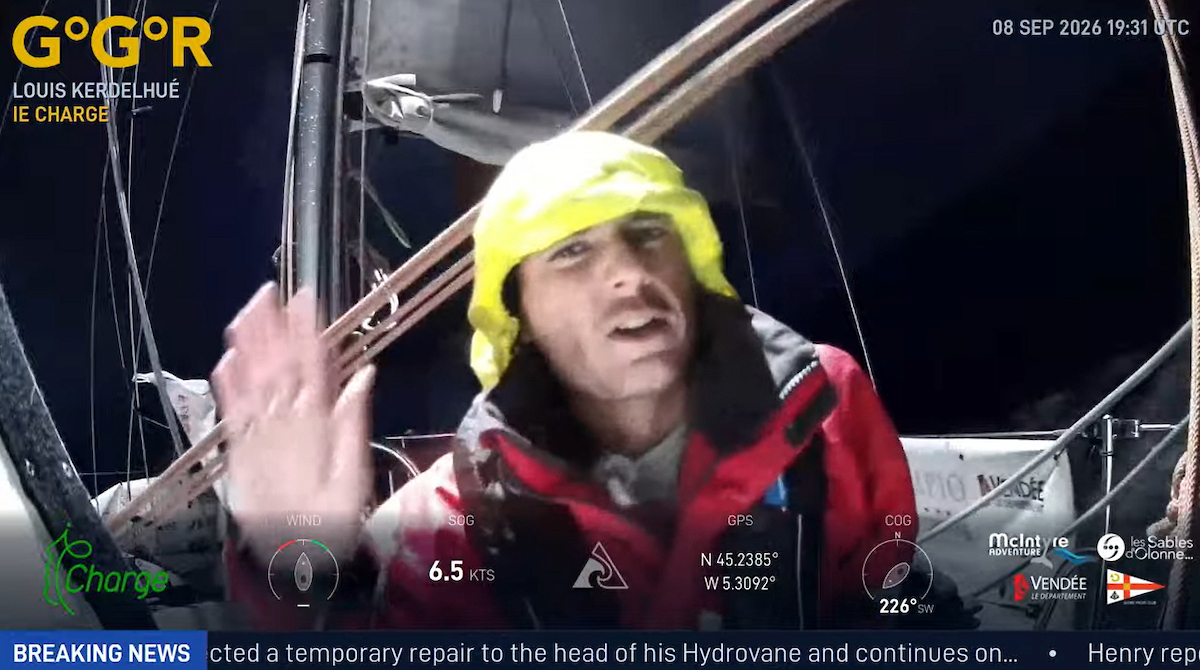
French skipper Louis Kerdelhué also reported trouble aboard his Biscay 36 IE Charge when the control head of his Hydrovane self-steering system could not be secured.
Kerdelhué considered returning to Les Sables-d’Olonne, but subsequently reported that a temporary repair was holding and continued racing.
Britain’s Ertan Beskardes, meanwhile, demonstrated the different approach required in a race of this duration. After running as high as second aboard the Rustler 36 Miss Beagle, he stopped sailing overnight to rest before resuming around midday Tuesday.
Following the race
The Golden Globe Race is providing daily tracker briefings and its GGR Window Live service throughout the circumnavigation, giving followers access to onboard footage and updates from the sailors.
Race organisers reported more than 40,000 unique website visitors on start day, while the first daily tracker briefing attracted more than 30,000 viewers.
With the Southern Ocean still around two months away, the fleet must first negotiate the North Atlantic, the equatorial doldrums and the long passage south.
The opening days in Biscay suggest the challenge has already begun in earnest.
-

Advertisement
-

Advertisement
