

Charting new horizons
Having already made history, Australian sailor Lisa Blair is once again pushing the boundaries of possibility with new goals in sight. Here, she talks to Sails about what’s next on the horizon.
Written by Daniela Aroche
10 November 2025
Advertisement
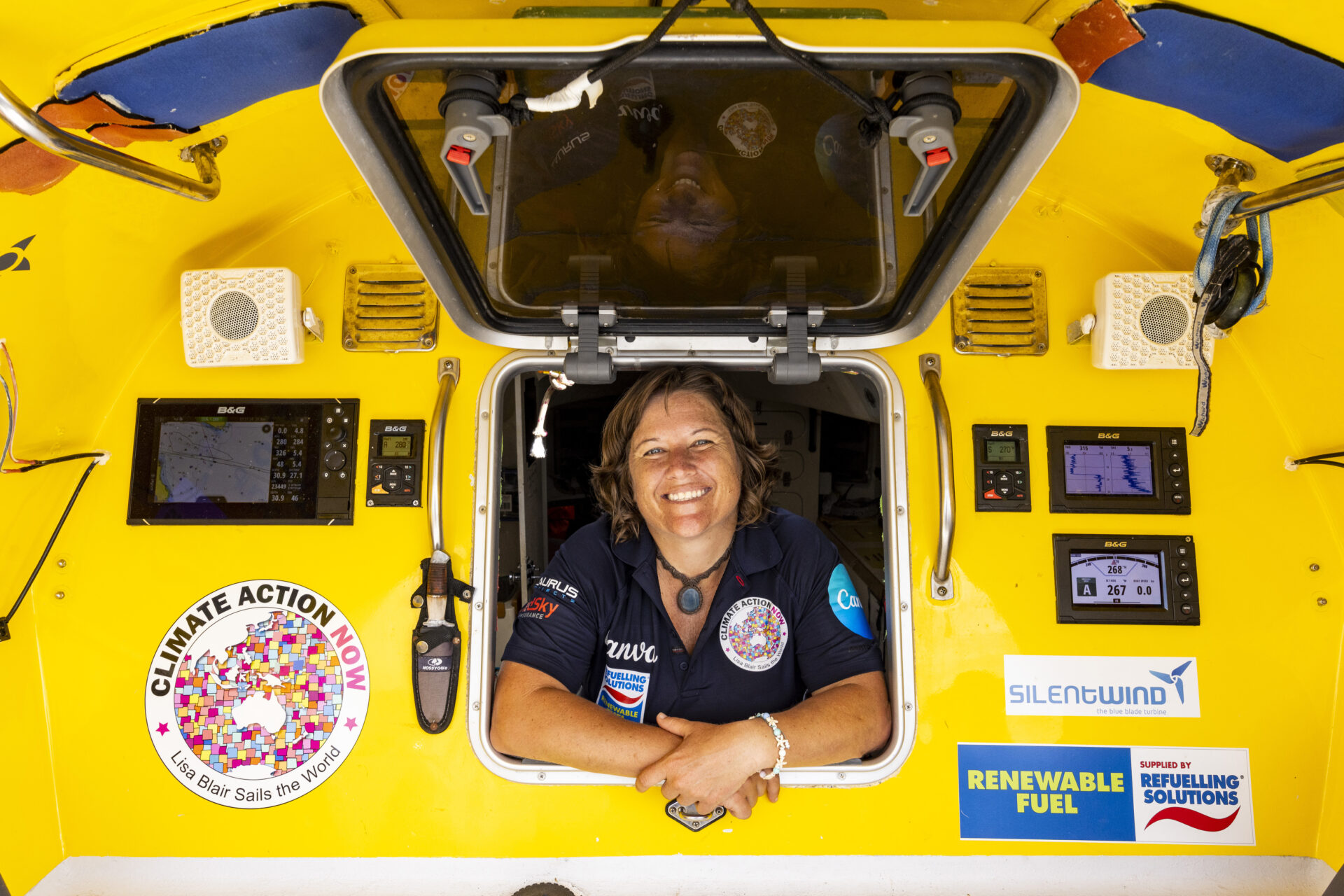
Best known for her pioneering and momentous journey aboard her yacht, Climate Action Now, sailing solo around Antarctica, plus holding eight world records and penning a book about her voyage, Blair will soon be showcasing her yacht at this year’s Sydney International On-Water Boat Show. She also plans to reveal details of the next extraordinary voyage that she’s gearing up for.
A floating symbol of environmental advocacy and a manifesto for change, Climate Action Now is known as the vessel that has carried Blair through some of the planet’s most extreme oceans, and in doing so, helped carry a message far beyond them.
Built for endurance and reborn through purpose, every line, sail and scar of that yacht tells a story of resilience, innovation and advocacy, and stands as both a symbol of what one woman can achieve alone at sea and what humanity must achieve together on land in terms of planetary stewardship.

Advertisement

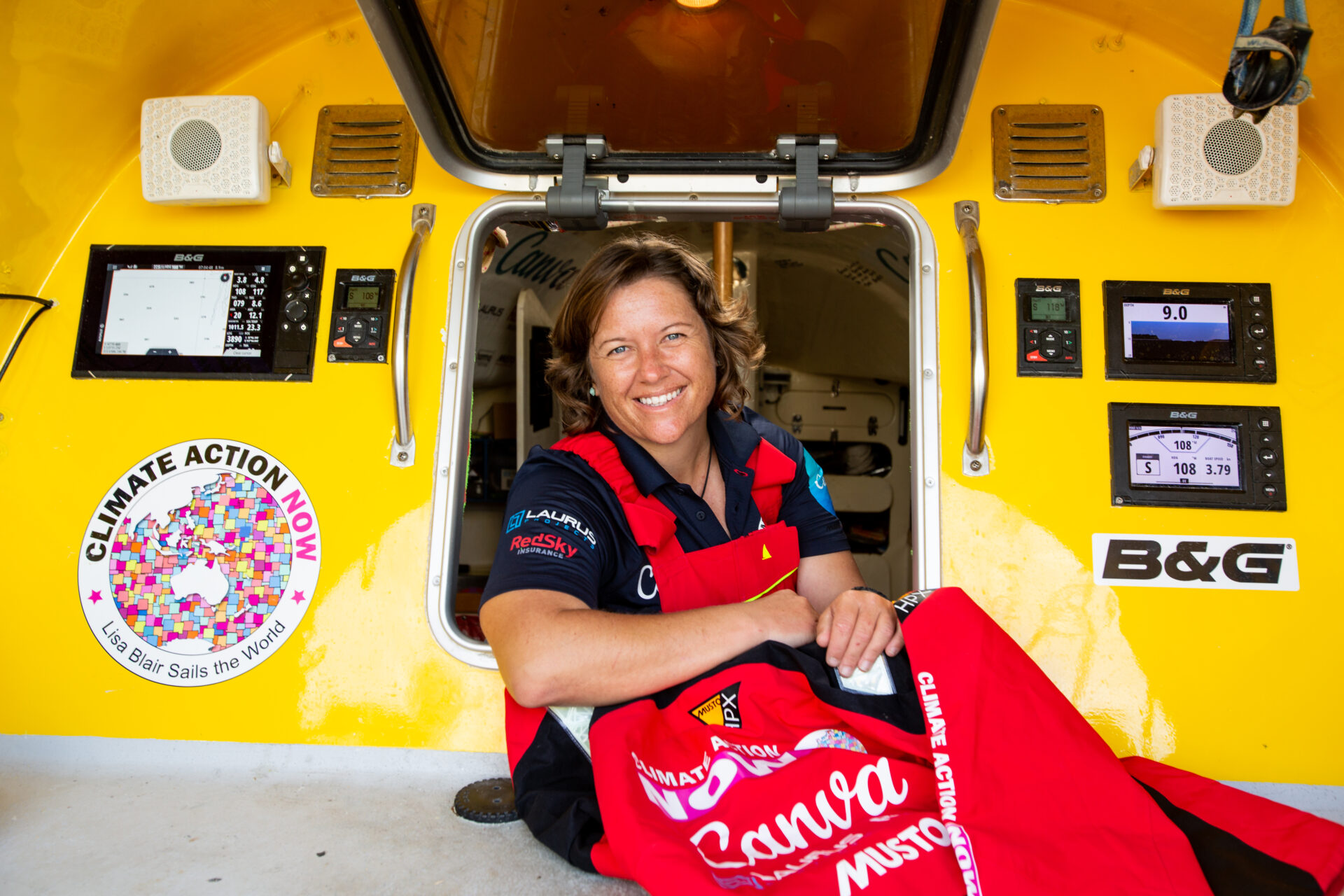
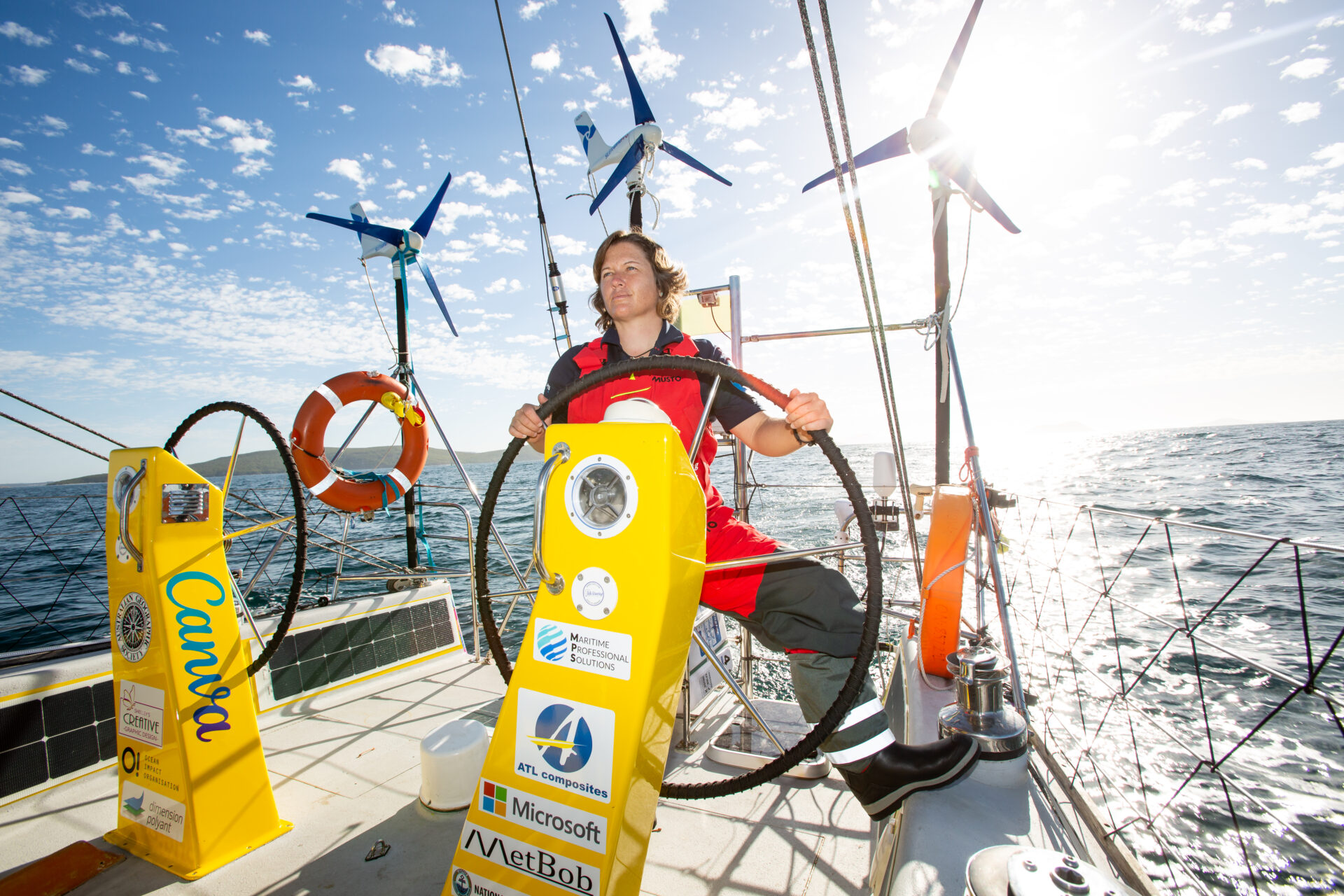
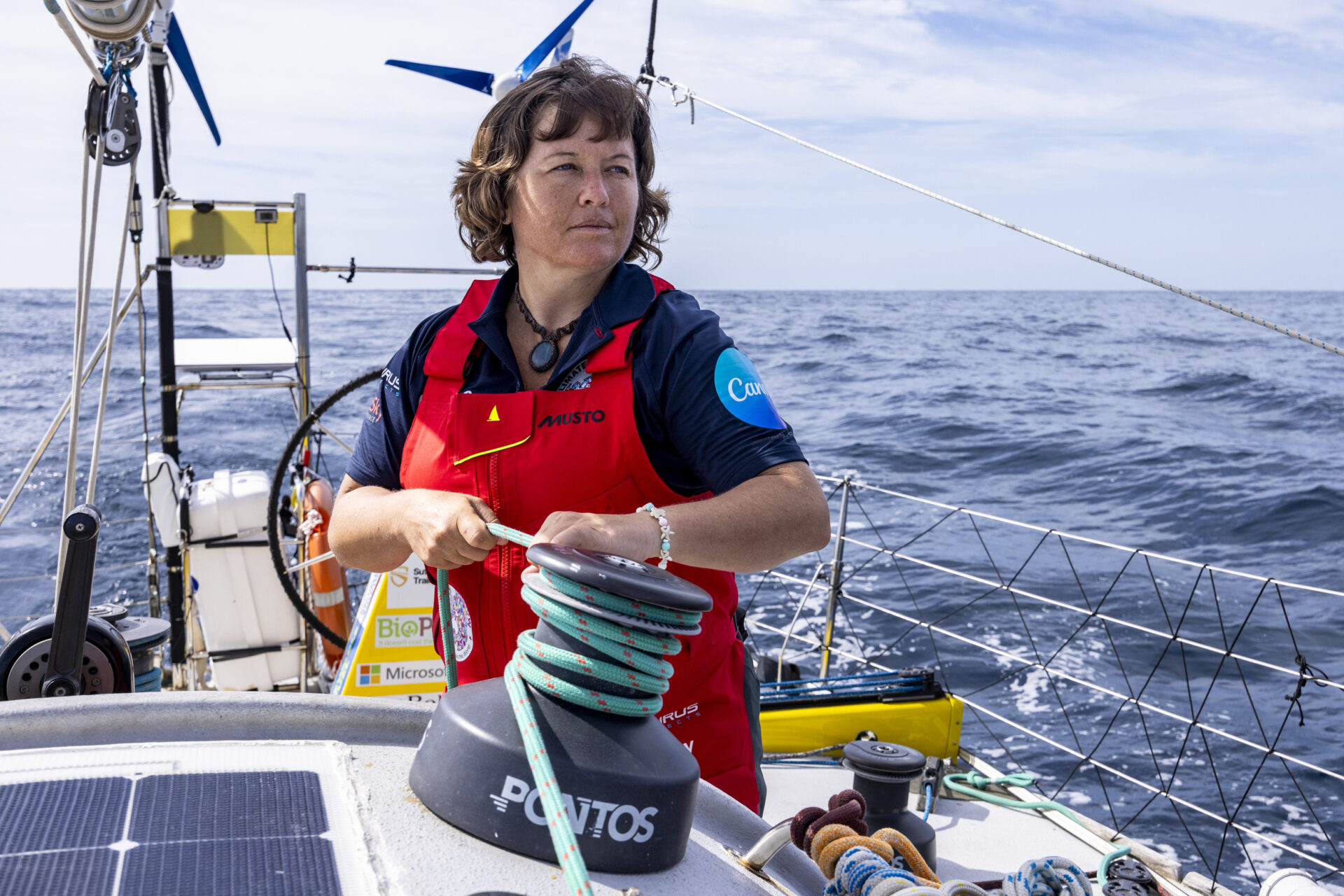
Through her 15.25-metre Hick 50 Climate Action Now, Blair turned her sailing into a global conversation about conserving our oceans and steered a movement toward a more environmentally conscious future. It made international news and an impact.
Between 13 and 16 November, it will be on display at the Sydney International On-Water Boat Show for others to be inspired by its presence. But true to form, Blair is not anchoring in the past.
Looking ahead to break fresh boundaries, her next goal is to build a new, 35-foot yacht crafted from basalt fibre, a volcanic material stronger and lighter than traditional fibreglass. Combined with bio resins, this experimental combination will mark a bold step toward sustainable boatbuilding.
With this next-generation vessel, she plans to embark on her most ambitious voyage yet: a solo, unassisted circumnavigation of the Arctic Circle in summer 2027 – a feat made possible and all the more urgent by the accelerating melting of polar ice due to climate change.
Lisa spoke to Sails about how she plans to achieve this, what led to her decision to embark on this trip, and what visitors to the Sydney On-Water International Boat Show can expect from her appearance aboard Climate Action Now.
You’ve made history sailing solo around Antarctica, what inspired you turn your compass north towards the Arctic Circle, and what key statements are you hoping this next voyage will make about climate change?
There are heaps! To start with though, to answer the first part of the question – it’s never really been about chasing records. It’s been about using the platform of world records to create impact and end sustainability developments. So, I’ve always known that I’ve needed to create a platform, and to do that, I’ve needed media coverage; and to do that, I need a world record or something interesting to talk about to be able to ignite change.
The Arctic has been on my list since I did the first Antarctica record. I was trying to map it out from the middle of the Southern Ocean on the first project in 2017 but I knew that I needed to finish that record again, and go back and complete that and develop the projects further before I could deliver what I imagined the Arctic project to be as far as the significance of how much community impact, sustainability, development, scientific research that I could get funded and delivered on a global scale.
It’s taken many, many years to get to this point, but I’ve been consistently building up to this foundational platform that allows me to consistently alter and impact from a positive perspective, focusing on climate change-specific ocean issues like micro-plastics.
I’ve then used that platform for storytelling so that we can connect everyday individuals with these really remote locations, so that they can become as passionate as I am about conservation efforts. That includes that link between what we do on land and how it affects these really remote regions.
You’ve also said that this journey is only possible because of melting sea ice. How do you reconcile the opportunity for exploration with this sobering reality that signals a warming planet?
I don’t think you could shout it any louder, and in any other way than by completing that record. But also, the fact that it’s only humanly possible to physically sail non-stop, solo and unassisted around the Arctic Circle because of climate change. My aim is to create conversation around that, and not just conversation, but actionable change.
So for me, this project’s got three key arms that I’m working across.
Essentially, by taking that premise of how to craft a project of impact using the platform of world records, I’ve effectively realised that climate change is one of the biggest problems that need solving. I feel like it gets a lot of negative messaging and people feel so overwhelmed by the enormity of the challenge in front of us. So, basically, everyone does nothing.
And so it’s how you can shift perspective, and shift everyday individual attitudes so that collectively, in the millions and the billions, we can drive sustainable behavioural changes and sustainable understanding of what our impacts are to these ecosystems, and then make those changes.
So that’s what this project is being framed around. It’s also about me and my support team looking at all the main challenges that I felt I could create impact on throughout the journey, and then doing that effectively.
So, essentially, we’ve broken the project into three key pillars of impact.
Starting at the top, we’ve got community. That includes continuing to expand the climate action campaign with the ‘Post-It Notes’ as a positive storytelling engagement piece and community activation piece and getting it off the boat and into live installations globally, and schools programs via the action station. We are connecting kids with adventure using the adventure story to educate around sustainability.
At the same time as I’m doing things like crossing the Continental Shelf, talking about what the Continental Shelf is and why it’s important, and why we use that data when we’re looking at forecasting sea-level rising, and how important it is to map the seafloor.
So, it’s looking at how we can create an education tool using this adventure platform, and how impactful we can make that tool for every day kids globally, not just within Australia.
Then the second section is science, building on the work I did in Antarctica, with a number of different collaborations that I had. The projects that I delivered out of Antarctica were endorsed by the United Nations as part of their Decade of Ocean Science. And with partnerships at the time, I was able to deliver a whole range of research, weather buoy and research equipment deployment. I was also able to gather micro-plastic samples and water samples around Antarctica with the sub-sea research unit.
We effectively converted the boat into a lab at sea and I did all that research, and the scientists in Australia then processed it when I got back to shore.
I plan on taking similar samples in the Arctic. So I’ll install a sub-sea Research Unit micro-plastic sampler on the new boat.
We’re also looking at eDNA (environmental DNA) sampling, which is a super cool thing where you can actually take a water sample and push it through a filter. You then preserve the sample and it can tell you every species’ DNA that interacted with that water in the past two days.
There’ll be areas I’m sailing that have very little traffic and almost no scientific research. I’m going to be able to help scientists create a biodiversity map of certain regions, so we can identify biodiversity hotspots. We’ll also find really remote, isolated zones where there’s not a lot of life. It’ll be super interesting!
It will also feed directly into the schools’ program, being able to talk to the kids about the different animals that we find with this equipment and how things like climate change might be influencing behavioural changes in those species. So, there’s a whole series of actions taking place.
And then the last section is innovation. In the years since I gathered information about the micro-plastics in the ocean, I’ve been learning a lot more about different stresses to our oceans, and one which I discovered is fibreglass from fibreglass boats. My current boat, Climate Action Now, is a fibreglass boat.

This isn’t a ‘let’s point the finger at the industry and name and shame’. I’m trying to show an industry that we can’t continue the way we are. We have to look at alternative solutions so that we can preserve the ecosystems that we want to play in and enjoy.
I’ve since learned that we currently have 35 to 40 million fibreglass boats reaching their ‘end of life’ today. And because we don’t have an ‘end of life’ process that’s accessible to your average boat owner, it becomes cost prohibitive for the boat owner to dispose of their boats correctly at the end of its life.
In Europe particularly, there’s a massive problem, where people are selling their boats for one euro just to get them out of their yards or out of their boat yards.
In Australia, we’re seeing it with a lot of abandoned boats on moorings up in rivers and estuaries, but people are also intentionally sinking the boats as a way of disposing of their vessel. Then the boats break down, and the epoxy becomes micro-plastics. The fibreglass becomes smaller, shards of fibreglass, and that goes into our food systems and into the ecosystems of our oceans in the life cycle of the food chain.
As an example, they did a study about what happened in Chichester Harbour in the UK, and 7,000 shards of fibreglass were found in one kilogram of oyster flesh.
Because of the significance of this issue, France ran a study where they said: ‘Bring us your boats and we’ll dispose of them. You just have to get them to these different drop off zones’. From this, they reported that they had about 2,000 boats disposed of legally within a 12 month window, and they estimated at the same time to have had around 100,000 boats abandoned or sunk in that same window of time. The problem was that it was logistically too difficult for people to get their boats to these depots.
So, it’s a significant issue that is only really just starting to take effect in Australia.
In Queensland, we have the ‘war on wrecks’, which the Queensland maritime organisations are working on. I think most recently, they had allocated $38 million in funding over a period of five years and had removed over 1,000 vessels that were abandoned in the Queensland waterways. These were a mix of vessels and they weren’t all fibreglass. Some were steel vessels and the like, but they were all old, decrepit, abandoned vessels. That’s now something that taxpayers are also paying for.
There are alternatives. There is a solution that I’m trying to effectively use this program to advance, and it’s a material called basalt fibre.
Basalt fibre is basically lava. It’s made by melting basalt rock. It’s made by melting it back to a lava, crushing it, melting it, and then it’s extruded into strands. Very similar in process to fibreglass construction, but it’s reportedly got 10 times more strength than fibreglass and has the same type of flexibility that fibreglass has. In theory, it should outperform fibreglass but it’s got a smaller environmental footprint.
As far as the core material itself for recovery and manufacturing, there is a slightly higher energy consumption in the heating elements of melting it, because it melts much higher temperature. But it’s fire proof, hydrophobic, acid proof, and has a whole wide range of benefits.
What we are struggling with though is finding the right bio-resin to match it that’s actually derived from natural materials that would give us the same longevity in our existing boats.
Fibreglass vessels have an average lifespan of 30 to 50 years. 30 years if it’s just a standard boat, 50 years if it’s well maintained. The old boats that you see made of fibreglass are of the original class where they were built from solid glass. We don’t make those boats anymore. We just don’t make boats in the same way. So, therefore that is a much shorter lifespan.
With this project, I’m using a large portion of the funds that I’m gathering for the record to fund the gap in the research that we currently have. And I’ve got some proposals sitting with a few organisations which I can’t release the details of just yet because we have to wait and see if approvals come through. It’s all in the works.
What I can say is that I’ve have some solid support from local researchers in Australia at one of our leading universities, and the intention is to fund the research gap between the current, scalable, viable bio resins that have to be able to be accessible globally, and the basalt fibre, then to see how the two materials can work together to create a vessel.
Then with that research, we’ll be building my boat for the Arctic out of the basalt fibre/bio resin combination.
Then I plan on sailing around the Arctic, and also doing a big education campaign around these materials, as I mentioned. At the same time, I hope to be working with current manufacturers and industries so that we can support them, share the research out with them, and help everybody transition to more sustainable solutions overall for the future.
In terms of how these next-generation materials compare to the traditional composites you mentioned, what kind of performance and sustainability advantages are you are you expecting?
Well, I know the basalt fibre will be simple. We know that works. It’ll be the bio resin lifespan. That’ll be the telling point on the life cycle of the vessels. But there’s almost no data on this publicly available. I’ve gone and approached a couple of manufacturers that are building boats from basalt fibre and bio resins globally, and I just don’t get anything back from them.
They’re not willing to share the information because they want to be the ‘next big thing’, which is one of the reasons that drove me to launch this element of the project. I just thought that if everybody’s pigeonholing and siloing their research, then nobody benefits. We don’t get the shifts taking place fast enough.
So, some of that I can’t answer because we haven’t funded the research yet. We need that research to be able to work out what those answers are.
But, you can look the surfboard industry, for example. At the last Sydney International Boat Show, I had my boat on display and some information about this project, and I was chatting to a pro-surfer. He now gets his surfboards made with basalt fibre.
He does that because he’s on a fibreglass surfboard and he gets about 12 months on the pro circuit before all his heel strikes cause the surface of the board to delaminate, making it useless. With a basalt-fibre surfboard, though, he gets around five years on average. The heel strikes don’t affect it the same way. The material absorbs impact better. It’s obviously a lot stronger, and because it’s stronger, you can build it with a better strength-to-weight ratio.
In theory, we should be able to make lighter boats from it too.
But I want to be clear, I’m not looking at tackling the carbon fibre industry. That’s another level. Again, I’m looking at tackling the recreational fibreglass marine market.
So you’re looking at anything from an Opti sailing boat, up to a 40-50 foot private motor boat, private sailing boat – basically, anything that’s currently built from fibreglass. This new material will, in theory, outperform all of that, and the data does support that at this stage.
What we’re trying to do now is the verification process so that we can accelerate that change.
Do you expect that once you have that data it will effectively influence future yacht manufacturing and sustainability standards overall?
Absolutely! I’m also hoping to fund some oyster bed research across Sydney and across other hot-spot sailing destinations in Australia, or marine fibreglass operating destinations.
In theory, I have to build the arguments that show that this is a solution, but also build the arguments that show that change is needed. That comes by being able to show the impacts to our local waterways, our food sources, what we’re eating, plus the contamination levels of the fibreglass boats in those areas, plus the scale of what’s occurring due to those abandoned boats in our rivers and waterways.
As an example, I’ve heard that a series of vessels are getting abandoned up in the mangroves. Now, mangroves are a very critical, very special ecosystem and if we disrupt that, due to abandoned boats getting dumped in these remote regions, those ecosystems are going to be completely flooded with fibreglass pollutants, not to mention all the other toxic items on board boats, like fuel oil from engines, coolant material etc. All of that would be leaking out over the lifespan of an abandoned boat, deteriorating in these environments.
I’m one person though, and although I do hope that this is the beginning of a change that’s coming forward, it requires customer buy-in, and industry buy-in, as well as the funding to make it all happen.

Regarding the new vessel you’re aiming to build, what are the biggest design or engineering challenges, and how are you approaching those?
There’s a slight change in the curing behaviour of the resins, which is going to be a learning curve for shipwrights and manufacturers. But it’s not a massive hurdle that they can’t get past.
As far as the Arctic is concerned, one of the big reasons why I’m building a new boat is because there are a completely different set of challenges there than in Antarctica. In Antarctica you see massive storms, and big open oceans, but you’re in deep water the whole time. You’ve got almost no land around you the whole time, so it’s a whole it’s a different kettle of fish.
The Arctic provides sheltered borders for most of the trip. There’s less than 10 knots of wind for about 70 percent of the record. So you need a very light boat that can sail well in light winds. But that boat also has to be strong enough to take the North Atlantic storms.
If you get caught in the middle of the Northwest Passage out front of Cambridge Bay, the winds can funnel and feed through that gap in such a way, and the water is so shallow there at about 20 to 50 metres, that it generates five to six metre swell in a very narrow passage, with uncharted waters all around you, and only a very narrow lane way that you know is safe. So, then you need a shallow boat.
I’m going to be in those environments, potentially with sea ice, although it’s highly unlikely there’ll be that much of the sea ice left by the time I get there. There will definitely be places though, where there’s ice from icebergs breaking up and rolling and being drifted with the currents from the fjords, and I’ll be in these narrow waters.
Because a lot of it is uncharted too, in the middle of certain areas, it might look like a big, beautiful bay that’s super open, but then suddenly there’s just a rock shelf in the middle of it that I could run aground on. So, the vessel has to be able to combat a whole series of complex problems.
In the way the boat’s built and the way we’re designing the layout, it’s going to be very specific for this purpose. We’re trying to design it so that I effectively live in the pilot house component of the boat so I can sleep, eat, do everything up there that I need to do, and I can maintain a solid lookout. Because you never know when you’re going to come across ice.
Ice also will be drifting in lines amongst the current. So I’ll end up being in open water, no ice in sight and then suddenly, I could hit an ice line and need to be able to slow the boat right down and weave my way through those ice cracks, and then hit open water on the other side again. I need to be able to increase the sails easily and efficiently, and then be able to carry on.
I’ll also probably be doing 10 minute sleep intervals most of the time, and in certain areas where I know there’s a lower ice risk I could increase those sleeps up to about 20 minutes.
As you can see, there is a whole series of complex challenges with the project. At the moment, we’re considering a double-masted design, so that the hauling of the sails up and down is less effort for me as a solo sailor and I can literally just take the middle mast and drop the sails and then rehoist afterwards without having to fuss too much with it.
I’m also looking at a small vessel, so about 35 feet, or maybe 40 feet – although I think that’ll be a bit too big. I think 35 feet is a pretty nice sized vessel for this challenge. I was originally looking at a 30 foot boat, but with all the science equipment on board: the buoy deployment, redundancies, spare storage, all of that, it might be a bit too small to fit it in properly.
We’re also looking at a triple-skinned hull. In a normal composite structure there are two layers of fibreglass and a core material. Often that’ll be foam, or sometimes it’ll be balsa wood or strip cedar planking or other materials. What we’re looking at doing though, is having an extra layer. So a layer of basalt bio resin, a core material, then another layer of basalt bio resin, another core material, and an external layer of the hull. The intention behind is that is that the external layer of the hull is completely sacrificial, knowing I will breach the external layer of the hull at some point.
Also what happens is, you have the icebergs, and when the wind’s blowing from the north, it will be blowing towards you, and so they will blow in. But what happens is, they’ll run aground, and ice itself can often be blown right to the shoreline, creating a little gap between the sea ice and the iceberg – a grounded iceberg that you can kind of sail through or work your way through.
Making sure that the boat can have a really shallow draft is really important as well. To do that it’s going to be a fully retractable keel. Nothing out of the keel will be external of the hull. So there won’t be a bulb or anything external of the hull. That’ll all go into the boat, and it’ll be flush. The reason for that is that if I’m trapped in ice, the shape of the hull is designed that if there’s one tonne of compression on the external sharp side of the hull, it will translate to half a tonne lifting power.
In theory, it’s like a cork getting popped free of a wine bottle. The boat will get compressed by the ice and sit eventually on top of the ice, rather than remaining trapped in the ice.
There’s definitely a lot of planning that’s gone on there. How long did it take to actually think of all that?
Well, it’s still ongoing, but the preliminary designs were done by naval architect, Andrew Dovell. Now we’re looking to build the boat and we’ve got the preliminary research starting next.
So we’ve got the preliminary designs done, and Andrew Dovell completed those just before he retired. Now we’re working on the more detailed design structure, and a lot of that will be done in development as we get the hull done, the internal layout and challenges like that will be kind of problem-solved throughout the course of next year.
But I’ve been thinking and dreaming of the logistics of how to survive a project like this, really since 2017. So for eight years or so I’ve been planning quietly in the background about this project, and it’s only been in the last sort of two or three years that I’ve been talking publicly about it. Then, for the last 12 months, I’ve been pretty much full time on the development of the project.
So it’s a significant outline of effort, but the community benefits and the outcomes at the end will be absolutely huge.
What other innovations are there going to be when it comes to onboard systems, energy generation or waste management?
A lot of that’s yet to be determined, but the intention is to make her as sustainable as humanly possible with current technologies. I’ll be looking at recycled plastic sails, and at bio-based dynamic ropes that get created these days.
As far as hardware itself, I’d be looking at the items that use less plastic, and the companies that have really strong sustainability focuses within their core branding, not the ones that just produce the best product.
For me, making sure that the project has an impact on the choices I make and the brands I’m activating through the campaign is just as important as the equipment that goes on the boat. With the other systems, she will have solar, wind generation, because there’s no no wind about 70 percent of the time, and as an emergency redundancy system, she’ll most likely also have a bicycle pedal power system that we’re working through the legalities of with the World Sailing Speed Record Council (WSSRC) at the moment.
I’m also not going to have an engine on board, but I will have a generator on board as a redundancy system, and that will be fuelled with biodiesel, which is what I took around Antarctica. Then there’s also hydro generation that I’ll be considering, because I had a lot of issues with that in Antarctica – but the technology has developed quite a lot since, so I just need to do a lot more research on that before then.
But it really is a fine line between proving new technologies and having the right redundancy, and the right reliability of equipment in really remote regions. Because while there are Inuit communities nearby, and there are vessels and crafts, I actually can’t stop in those ports, because I still have to pretend I’m in the middle of the Southern Ocean completely on my own, and make sure that the vessel is built around that mandate, because I can’t go for help or I avoid the record.


How closely are you working with naval architects or material scientists and classification societies for things like the recycled plastic sails you mentioned?
I’m not yet at a spot yet where I’d be comfortable naming names for that. There’s a lot more I have to do, and the project has to develop a little bit further before that becomes a priority in my world.
At the moment, it’s really focused on the basalt fibre, bio resin research arm of the project, digitising the post-it notes and so on, so we can start doing global interactions with that and firming up my scientific partner. There are shifts with the different research organisations, but again, I can’t release that information just yet.
Do you have a name for your new boat, a set date for when it will be finished, and dates for the trip?
No, not yet because I’m still waiting for sponsorship. The first phase of research starts in January, providing we get the matched funding approved, and I can raise the baseline funding I need for it. Then we’ll be looking going into construction of the hull around May/June next year. It will take about six to eight months to build the boat, depending on the complexities and the availability of the different boat yards.
Whether I build the boat in the UK or France or here, that is still being determined. But the intention is to launch the boat towards the end of next year. Then I’ll have three to four months of training on the vessel in the English Channel and sailing down towards the Med, and then probably around June/July in 2027 I’ll depart for the record.
What does it feel like to bring your record-breaking yacht back into the public eye and what story do you want visitors to take away when they see her at the Sydney International On-Water Boat Show?
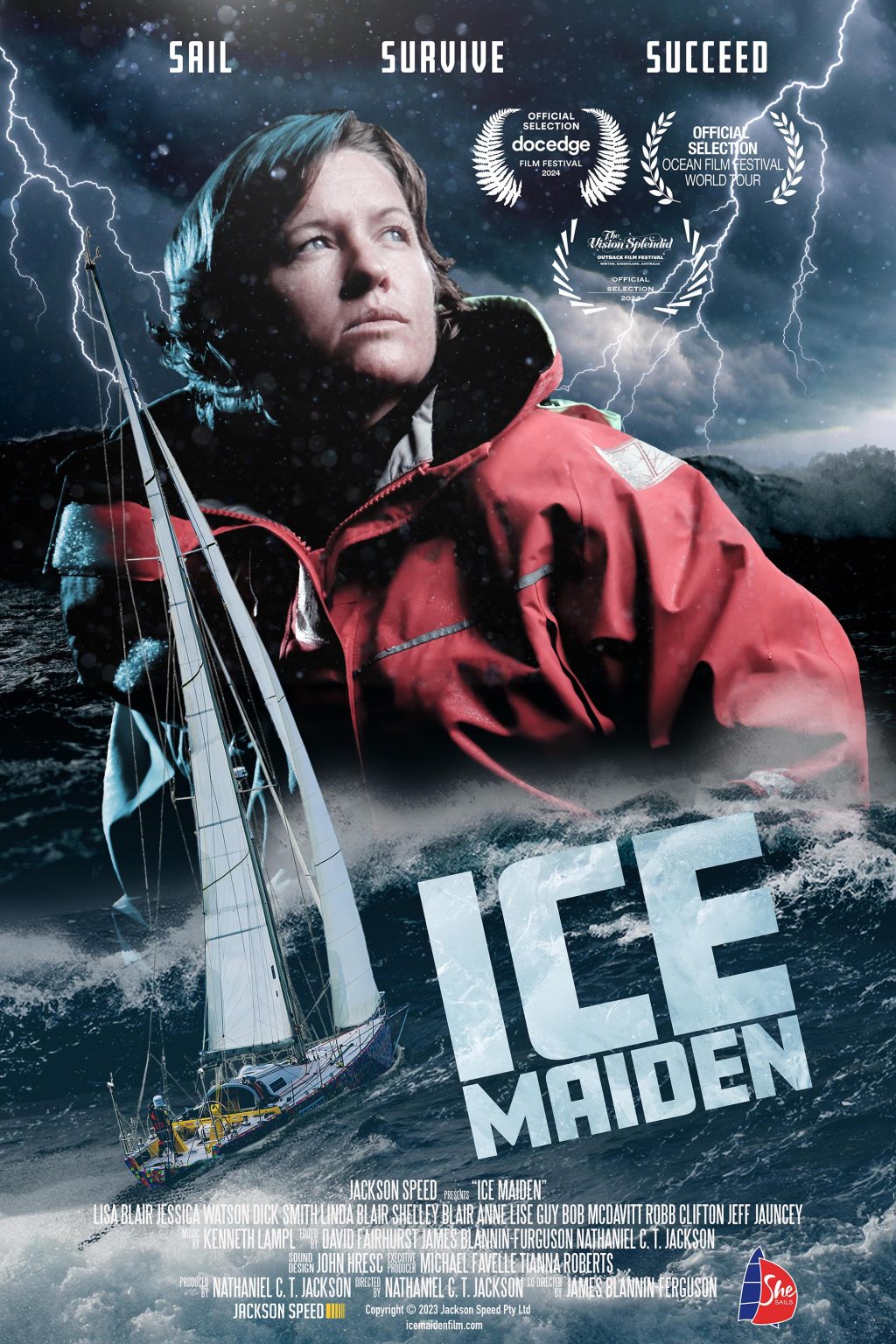
She’s still wrapped in thousands of post it notes, so she’s still a great source of inspiration, but she’s a unique beast. I want people to get connected to the project and excited about the project, because if they connect with the Antarctic story, it’s a great start. And they should like the documentary, Ice Maiden, which is now available online, and I’ll also have DVDs for sale at the boat show.
It’s a really great way of people who love ocean, love sailing, to connect with an adventure like that. At the Show, they can also jump on the boat, they can climb through the hull, they can climb into my bunk, and they can get a sense of what it was like for me to spend three months on my own in the Southern Ocean.
At the Show I’ll be on board every day, sharing stories, talking to people, talking about the next project. I’ve also got some samples of the basalt fibre and bio resin to show people. It’s a way of letting the public know what’s coming up, how to follow, how to engage, how to support, and what they can do with their own climate actions.
How well do you feel that the yachting industry can accelerate the transition, without compromising on safety or performance?
I think there’s a lot of effort being made in trying to become sustainable with things like electric engines, hybrid engines, that sort of system. The problem that we have is that your average boat owner only uses their engine 40 hours a year.
Spending a lot of investment for an existing boat to transition their entire systems across actually has a higher carbon output than just keeping the systems you have. So, transitioning the fuels you use is a cleaner form of up-cycling, however, very few are tackling the materials that boats are built from, as well as the design elements that influence circularity.
With that, I think we’ve got a lot of work to do, but I also know that sailors love sailing because we’re so connected to the ocean, and we just love being out, having adventures on the water. And so if we continue to do that, and to want to do that, we know we have to make change.
Due to that you’re seeing conversations on innovation, development, etc – and there are a lot of brands starting to work with alternative materials for non structural areas of their vessels.
I do think that there’s still a huge amount of work that can be done in that space, but quite quickly, without losing their customer base or the quality of products that they’re delivering.
I also think that these days, consumers are choosing brands that have sustainability at their heart, and that are doing amazing things for community. Plus there’s a lot more social awareness on what needs to change – and I know at least amongst my network of people, people are choosing even who they bank with based off the sustainability outcomes of that bank.
So why wouldn’t that eventually filter into all these other ecosystems, like our cars, like our caravans, like our boats, like the toys we play with, like our surfboards and our kayaks and everything else that can be easily, kind of, swapped over?
The big problem that I see though is just information. Most of the general public just aren’t aware of how damaging fibreglass is. There’s no story being told about that yet.
For me, that’s also where this project is really important. Thinking about how we can tell that story in a way that doesn’t isolate industry, and supportive of the existing marine industry, people looking for solutions and wanting to take those changes? Then there’s the question of how can I be an ambassador for that change, and how can I use my platform to educate the consumer audience, so that when they have these products available, that there’s a market for available for them? That’s where it all begins. Information and asking and answering those questions.
-
Advertisement
-

Advertisement
-
Advertisement